
Categories
Buyer Guides, Living in Northern VirginiaPublished October 6, 2026
Buying Near a Data Center in Northern Virginia? What to Check Before You Make an Offer

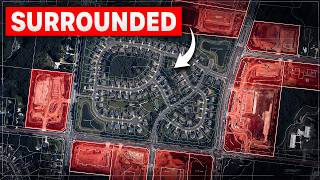
NORTHERN VIRGINIA HOME BUYER GUIDE • By Chris Colgan • Research checked October 5, 2026
You can change the kitchen. You cannot control what gets built beyond your property line.
That is the central point of my video about Northern Virginia's expanding data center footprint. Before you fall in love with a backyard, a wooded view or a quiet street, look at the land around it. Find out what exists, what is proposed and what has actually been approved.
Data centers are part of this region's economy. The question for a home buyer is more specific: How does this particular location fit the way you want to live? A facility across a major highway is a different situation from equipment facing your patio. A proposal is different from a completed campus. And a reassuring regional housing statistic cannot answer every question about one house.
The quick answer
Buying near a data center calls for a closer look at surrounding parcels, project status, noise, views and supporting infrastructure. Make the decision using the actual property and current records—not a rumor, a thumbnail or an assumption that vacant land will stay vacant.
Cover: Chris Colgan's supplied video thumbnail. Red highlighting is editorial illustration, not an official zoning or approved-development map.
Watch: the land around your next home matters
In the video, I explain why buyers need to look beyond the house itself when evaluating a Northern Virginia neighborhood. Use the checklist below alongside current county records; individual proposals and court proceedings can change after a video is recorded.
Watch the full video on YouTube
Know what is changing around Northern Virginia.
Get local news, openings and community updates in the Real NoVA Newsletter.
Subscribe to Real NoVA →Why this is a neighborhood question
Virginia's Joint Legislative Audit and Review Commission identified fiber connections, available land and reliable energy among the reasons Northern Virginia became a major data center market. Its December 2024 report also described expansion beyond established locations and substantial local tax revenue that varies by jurisdiction. Those regional benefits belong in the discussion, alongside the practical experience of nearby residents. Read the JLARC report summary.
For your home search, start with the address. The words “Northern Virginia” cover too much ground to tell you what you will see from a bedroom window or hear on an evening walk. Even two homes in the same neighborhood can have different exposure because of elevation, orientation, intervening buildings and distance from equipment.
Your priorities matter, too. Someone who spends hours in a backyard may evaluate a location differently from someone whose main concern is a short commute. Write down what you would find unacceptable before touring. It is easier to evaluate a tradeoff honestly before you become attached to the house.
Do data centers lower nearby home values?
A George Mason University article published in November 2025 summarized research on 2023 Northern Virginia home sales. The study found that homes closer to data centers tended to have higher prices. The researchers discussed shared location advantages, such as infrastructure and employment access, as possible explanations. That relationship is not proof that a data center caused an individual home's value to rise. Read George Mason's explanation.
There are two separate decisions here. First, does the asking price make sense compared with relevant recent sales? Second, would you enjoy living in this location? A house can be competitively priced and still have a setting you do not want. It can also be near industrial development and remain attractive to buyers who value its other features.
For a useful comparison, examine similar homes with similar surroundings. Consider condition, lot position, property type and the dates of the sales. Do not apply a countywide median or a blanket “data center discount” to a specific listing. If nearby construction or a new application changes the picture, ask how recent the comparable sales are and what buyers knew when those contracts were signed.
What should you look for beyond the building?
Sound deserves attention. JLARC reported that persistent noise has affected some nearby residents, while a large majority of facilities did not generate noise complaints because of their location or design. That is a reason to investigate the specific setting, not assume every facility has the same impact. See the report's residential-impact findings.
On a visit, step outside and listen. Walk the permitted public areas near the property. If possible, return at a different time and compare what you notice. A casual visit is not a professional noise assessment, but it can help you identify questions worth taking to the county, the seller or an appropriate specialist.
Study the view and the supporting infrastructure. Ask where buildings, screening, service areas, substations and any proposed utility routes are located. A tree line visible today may not tell you the final appearance of an approved plan. A facility's main entrance may be less relevant to your experience than the equipment or service area on its other side.
Separate construction from operations. Temporary construction activity and the completed site's operation are different issues. Ask which phase you are observing and which later phases remain possible. A partly built campus should not automatically be evaluated as though the current conditions are its permanent final form.
Seven checks before you make an offer
1. Identify the surrounding parcels
Start with the home's address in the appropriate county map. Look beyond the listing's lot boundary, including land behind the property and across nearby roads. Record parcel identifiers for the sites that raise questions. A parcel number gives a planning staff member something precise to investigate; “the woods behind the subdivision” may not.
2. Read current zoning and future land-use information separately
Ask the planning office what the current zoning allows and whether any pending applications affect the property. Then review the locality's longer-term land-use plan. Do not treat an aspirational planning designation as a construction permit or assume the current use is the only possible future use.
Loudoun's rules demonstrate why dates matter: the county adopted Phase 1 data center zoning changes on March 18, 2025, moving certain permissions from by-right to special-exception approval. That does not establish the status of every existing or pending project. Check the particular parcel and applicable approvals. Loudoun's data center standards and locations.
3. Find the actual application and its latest action
Look for the case number, staff report, site plan, approval conditions and most recent official action. Distinguish a submitted proposal, an approved rezoning, a site under construction and an operating facility. If litigation affects an approval, obtain the latest official status rather than relying on a headline from a previous month.
Prince William County's interactive data center mapping is designed to make project information easier to locate. Use it as a starting point, then follow up on the underlying case documents. Find the county's map announcement and access information.
4. Ask about the pieces outside the main site
Identify any associated power facilities, utility corridors, access roads or separate applications that deserve review. Ask which parts are confirmed and which are alternatives still under consideration. Do not draw a final transmission route from an early conceptual map.
5. Visit with your daily routine in mind
Try the driveway, the outdoor space and the rooms you expect to use most. Think about working from home, sleeping, walking and hosting outside. Ask neighbors specific questions about what they have actually experienced, including when and where. Treat their accounts as useful leads to investigate, not substitutes for records or specialist findings.
6. Put unanswered questions on a written list
For each question, identify who can answer it, the document you need and when you need the answer. “Ask about development” is too vague. “Confirm whether parcel X has an approved site plan and obtain the plan before our decision deadline” is useful.
Virginia's official residential disclosure guidance tells buyers to investigate adjacent parcels and their permitted uses; the disclosure framework does not provide a blanket assurance about neighboring land. Other disclosure duties may still apply. Review your particular documents and contract deadlines with your agent and, where needed, a Virginia real estate attorney. Virginia DPOR's disclosure guidance.
7. Compare alternatives before deciding
Keep at least one realistic alternative in the conversation. Compare total housing cost, commute, condition and the surroundings of each home. Sometimes the research supports moving forward. Sometimes it points you toward another street or community. The goal is an informed choice that matches your priorities.
Want help comparing two locations?
Send us the addresses, your budget and your moving timeline. We can help organize the property research and compare homes, while directing zoning, engineering and legal questions to the right professionals.
Start your Northern Virginia home search conversation → or call 571-437-7575.
If you are selling near proposed development
Prepare for the questions buyers are likely to ask. Keep relevant public documents organized, distinguish current facts from assumptions and be accurate about what the surrounding land shows. Avoid reassuring language such as “nothing can ever be built there” unless the specific statement has been established by reliable evidence.
Pricing should reflect the property and current competition. Gather showing feedback so you can distinguish location concerns from objections about condition, layout or price. One buyer's concern does not establish a marketwide conclusion, but repeated, specific feedback can help shape the next conversation.
Before changing your price based on a neighborhood rumor, ask for a current comparison and a review of the actual project status. Email the Colgan Team your property address and selling timeline.
My take: research the location as carefully as the house
The point I make in the video is simple: buyers need to look beyond the attractive finishes and understand the surrounding land. Vacant acreage is not automatically a permanent buffer. A development headline is not automatically a reason to reject an entire town. Get specific, ask better questions and decide with the facts in front of you.
You deserve to understand the tradeoffs before you commit. That applies whether you are buying your first townhouse, moving into a larger home or choosing a place to retire.
Five questions Northern Virginia buyers ask
Does “near a data center” automatically mean a bad location?
No. Evaluate the particular home, distance, orientation, current conditions and plans. Your tolerance for the setting matters. There is no single answer that fits every facility or household.
Can a wooded parcel beside a neighborhood be developed?
Its appearance alone does not answer that. Check parcel ownership, zoning, recorded restrictions and current applications. Ask the appropriate planning office to clarify anything you cannot establish from the records.
Should I rely on an old article about a proposed campus?
Use it to identify the project, then check the latest official case information. Approvals, conditions and legal proceedings may have changed since publication. Save the date of the records you reviewed.
What if I like the house but still have unanswered questions?
Write down the exact issues and discuss the time available to investigate them before making contractual commitments. Ask the relevant county staff or professional for clarification rather than treating uncertainty as reassurance.
Can the Colgan Team help me evaluate a specific address?
Yes. We can help compare homes and organize questions about their surroundings, then connect you with the right sources for specialized answers. Send us the address, target budget and timeline.
Keep up with the places you are considering.
Subscribe to the Real NoVA Newsletter for Northern Virginia news, openings and community updates.
Let's find a home that fits your life
If you are buying or selling in Northern Virginia, we would love to help you make the next move with a clearer picture of the property and its surroundings. Tell us where you are looking, what matters most and when you want to move.
Talk with Chris and the Colgan Team

Chris Colgan Team
Real Broker, LLC | Powered by PLACE
Call/text: 571-437-7575
Office: 571-621-7660
info@colganteam.com
Chris Colgan
Team Leader | Chris Colgan Team | REAL | PLACE
or another way