
Categories
Local Insights, Housing Market UpdatesPublished September 16, 2026
Why People Keep Moving to Northern Virginia—and What It Means for Home Prices

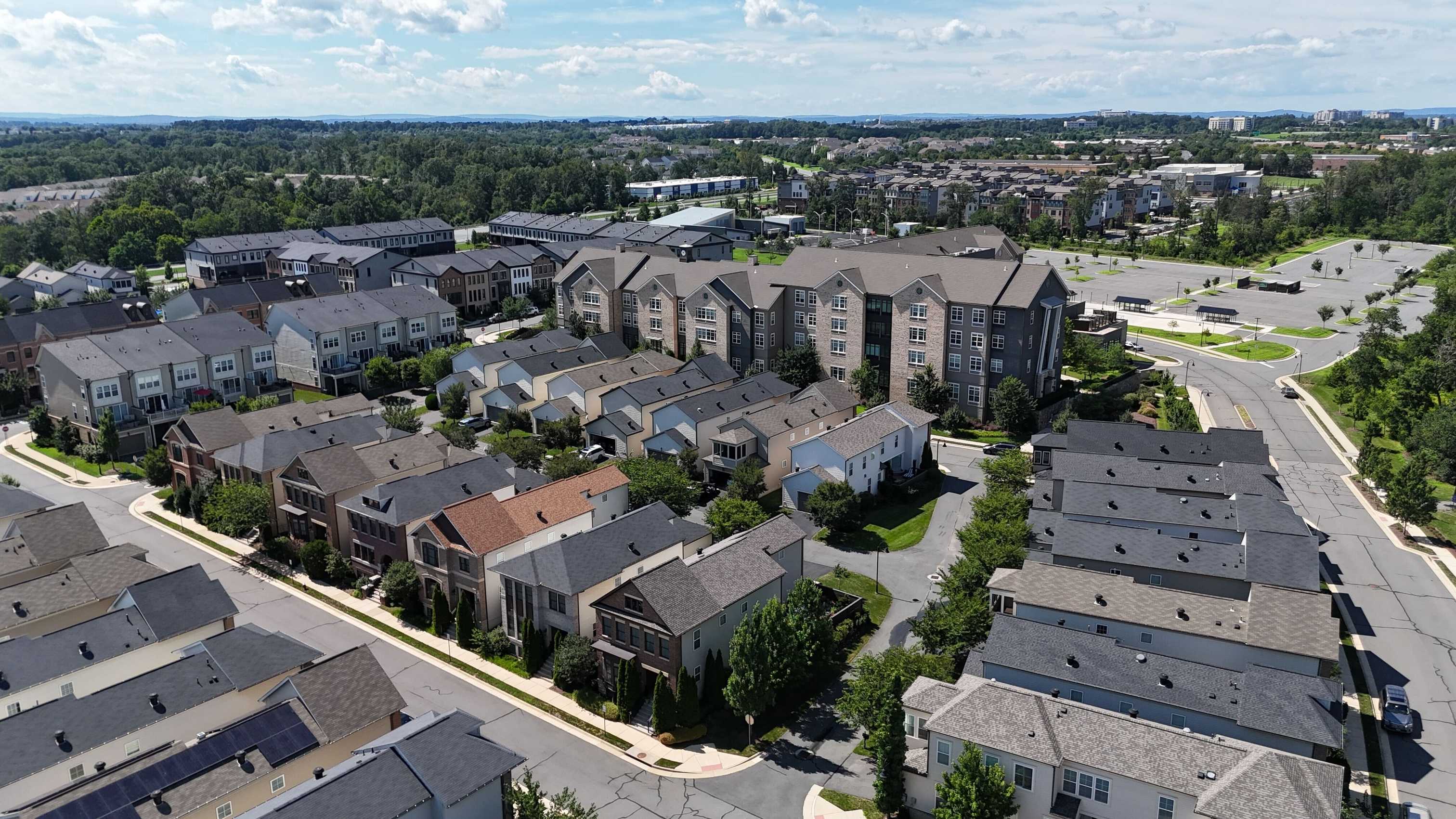
By Chris Colgan · September 16, 2026
Why do people keep moving to Northern Virginia? My take is that access to work, the search for more space, and the ability to choose among very different communities keep this region in the conversation. But continued interest does not mean every neighborhood gets more expensive every month. August 2026 data show more active listings in all seven local markets compared below, while prices and sales moved in different directions.
I was born and raised here, and I have spent two decades working in this market. What stands out to me is how different the same move can look depending on where you land. A buyer considering Ashburn is making a different daily-life decision from someone considering Stafford or land outside Leesburg.
My advice starts here: “You pick your area first, then you pick your house.” The growth story matters. Your commute, budget and specific neighborhood matter more to the home you actually buy.
Cover photo: One Loudoun in Ashburn, from the Chris Colgan Team photo collection. The area photographs in this article are real, archival images; their capture dates are unverified.
What the population numbers actually say
The Northern Virginia Regional Commission reports an estimated 2,628,004 residents in 2025. Its September 8, 2026 fact sheet also reports a regional forecast of about 3 million residents by 2040. That is a planning forecast, not a guarantee. Sources: NVRC population dashboard and September 2026 demographic fact sheet.
There is an important distinction behind those numbers: population change combines births, deaths and migration. Dividing annual population growth by 365 would not tell us how many people moved here each day. It also would not count all arrivals, because people leave the region too.
That is why I would not build your buying or selling decision around a “70 people moving in every day” headline. The stronger question is whether the homes you would actually consider have more competition, more alternatives or both.
Geography matters: NVRC's population region and the wider home search area discussed here are not identical. Stafford, Fauquier and Winchester can be part of a buyer's comparison without being included in that 2.63 million population estimate.
Two kinds of moves I think about—not a measured split
When I look at this region, I think about two different housing decisions. One is the newcomer choosing a location around work and a new life here. The other is the household already in the Washington area deciding it wants more room, a different setting or a workable hybrid commute.
That is my framework for discussing the market, not a statistical finding that every mover fits one of two categories. It does not establish how many technology or defense workers moved to Loudoun, or prove that newcomers caused a particular price increase.
The useful distinction is practical: a household that must reach an office five days a week has a different search map from one that can tolerate a longer trip twice a week. Neither should start with a regional median price and assume it describes the homes on its shortlist.
Starting your search from out of town? Get my free Northern Virginia relocation guide to start comparing communities before you narrow down the houses.
A growing region can still give buyers more choices
Look at Loudoun County in August 2026: the median sold price was $771,250, up 0.9% from August 2025. At the same time, active listings rose 17.6% and closed sales fell 16.9%. Those measures can coexist. A slightly higher median does not mean every listing has multiple offers or that every owner gained 0.9% in value.
Stafford tells a different story: a $545,000 median, down 0.9%, with active listings up 19.5% and closed sales up 11.4%. These are all-property monthly totals, not a comparison of equivalent detached homes. Source: Bright MLS via SmartCharts / MarketStats by ShowingTime, August 2026; full local comparison below.
For sellers, population growth is background context. It is not a pricing strategy. Your competition is the set of homes a buyer can substitute for yours, including their condition, location and asking prices. For buyers, more inventory is a reason to investigate choices—not a promise that every seller will negotiate.
How I would compare three very different search areas
Ashburn, Herndon and Reston: start with the actual work trip
If your work puts you around Dulles or the eastern Loudoun–western Fairfax corridor, begin by testing the route from each prospective neighborhood to your actual destination. “Near Dulles” is not a door-to-door commute measurement.
Then compare like with like: townhome against townhome, similar size, similar condition and a realistic improvement budget. My preference is to give homes needing paint, carpet or a kitchen update a serious look. That can expand your options, but the repair estimate and inspection still have to support the purchase. Cosmetic work is not a guarantee of a bargain.
You can explore Ashburn homes and community information as a starting point. Do not substitute Loudoun's countywide median for the value of a specific Ashburn home.
Stafford and the Fredericksburg area: price the whole week
The lower Stafford median makes this a worthwhile comparison for some households. It does not prove that moving south produces the same savings for every home type. Add transportation, parking, tolls and the time required by your actual work schedule before treating a lower purchase price as the better overall fit.
Rail needs a current check. VRE's Fredericksburg Line is oriented around weekday commuting, and construction-related service changes mean some trains terminate or originate at Alexandria. Do not assume every trip offers a direct ride to your Washington destination. Check the current VRE timetable and Long Bridge service adjustments for your exact morning and return trains.
For new construction, ask for a written, current incentive sheet and compare the total purchase and financing terms. An expired summer promotion should not be part of a September budget.
Leesburg and the western search: verify what the address can do
The western side is my favorite part of the map, and it comes with homework. If you want land, privacy or a different pace, compare the property itself as carefully as the house. A Leesburg mailing address does not tell you everything about zoning, utilities or daily travel.
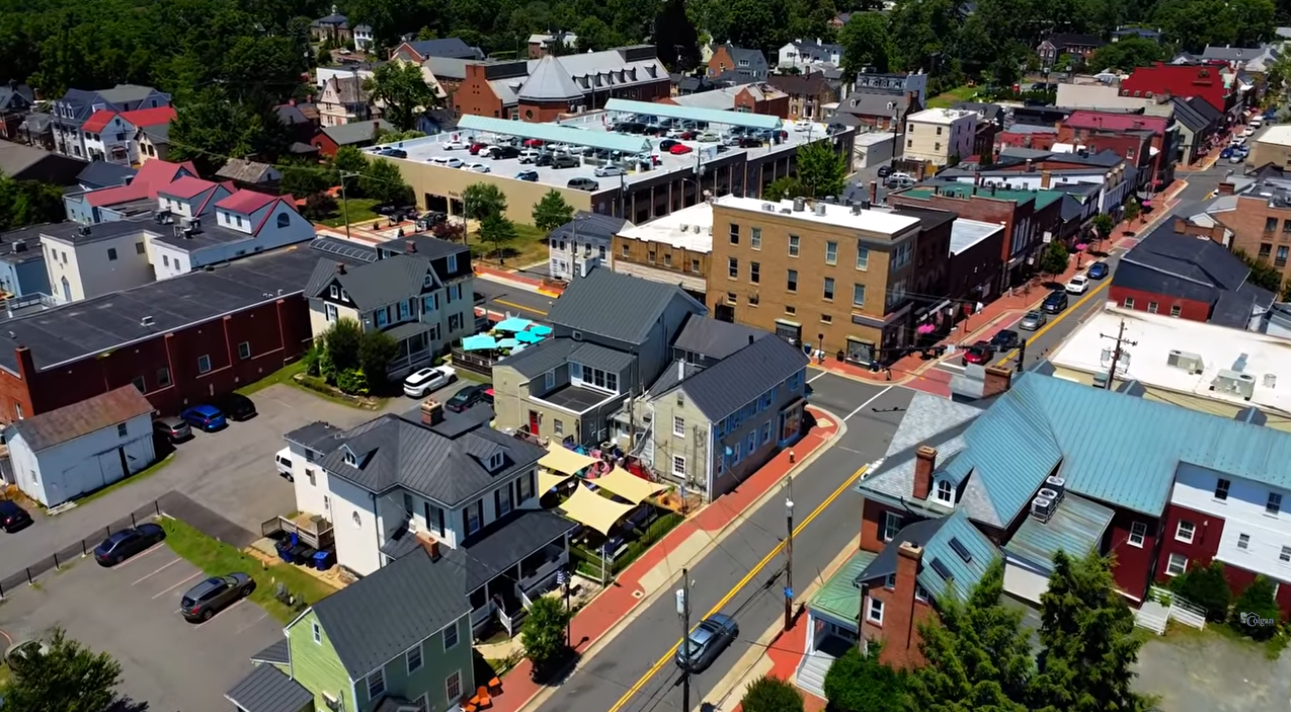
Historic downtown Leesburg. Real archival photograph from the Chris Colgan Team collection; downtown surroundings should not be confused with conditions at a rural property.
Loudoun's broadband expansion project is designed to reach more than 8,600 homes. That number describes the project scope, not 8,600 people still waiting for service today. Availability is being rolled out, so verify service and installation timing for the specific address with the provider. Source: Loudoun County broadband expansion updates.
If an extra dwelling, workshop or future addition is essential, verify the parcel's permitted uses before relying on that plan. A large lot alone does not establish what you can build. Start with Leesburg homes and local resources, or broaden the comparison with Winchester homes and community information.
My take: buy the daily life, not the growth headline
I think Northern Virginia will remain a place people consider for work, space and different ways of living. That is my outlook, not a promise about migration or future prices. The regional forecast supports planning for growth; it does not remove the risk of overpaying for the wrong house.
A useful next step is to shortlist two or three areas and compare the same four things in each: a realistic home budget, the full commute, the type of home available, and the address-specific compromises you can accept. Then evaluate current comparable sales and competing listings.
Want my help narrowing that map? Book a 30-minute conversation with me. Bring your work location, budget and must-haves, and we can talk through which areas deserve a closer look.
Five questions about moving to Northern Virginia
1. Are 70 people really moving to Northern Virginia every day?
The sources reviewed for this article do not establish that daily arrival count. Population growth includes births and deaths as well as people moving in and out. NVRC estimates 2,628,004 residents in 2025; that total should not be converted into an unsupported daily migration claim.
2. Does population growth mean home prices will keep rising?
No. Housing demand also interacts with supply, affordability and the mix of homes sold. In August 2026, all seven markets below had more active listings than a year earlier, while median-price changes ranged from negative to positive. A median change is not individual-home appreciation.
3. Is Stafford cheaper than Loudoun?
Stafford's August 2026 all-property median sold price was $545,000, compared with Loudoun's $771,250. That is a comparison of their monthly sales, not equivalent homes. Compare the property type you want and add the cost and time of your actual commute.
4. Can I rely on VRE if I move toward Fredericksburg?
It may fit a weekday commute, but check the specific trains, destination and return schedule. Current construction adjustments affect some services at Alexandria, so a transfer may be necessary. Use VRE's current schedule instead of an old route summary.
5. What should I check before buying land west of Leesburg?
Confirm internet availability at the exact address, permitted uses, access, utilities and the feasibility of any planned improvements. Also test your commute. A listing's acreage or general location does not verify that your intended use will work.
Local housing snapshot: August 2026
This is historical monthly context, not live inventory. All property types; year-over-year comparisons are against August 2025.
| Market | Median sold price (YoY) | Active listings (YoY) | Average days on market (Aug. 2025) |
|---|---|---|---|
| Fairfax County | $752,250 (−0.4%) | 1,985 (+20.3%) | 25 (24) |
| Loudoun County | $771,250 (+0.9%) | 907 (+17.6%) | 24 (23) |
| Prince William County | $599,900 (+5.2%) | 916 (+24.3%) | 24 (21) |
| Fauquier County | $675,000 (+4.7%) | 247 (+13.8%) | 27 (29) |
| Stafford County | $545,000 (−0.9%) | 502 (+19.5%) | 30 (25) |
| Arlington County | $860,729 (+14.8%) | 470 (+12.2%) | 32 (41) |
| Alexandria City | $752,500 (+9.1%) | 390 (+22.6%) | 26 (24) |
Source: Bright MLS via SmartCharts / MarketStats by ShowingTime, August 2026 Local Market Insight reports, calculated September 4, 2026; source counts and prices reconciled across CSV/PDF reports, with percentages rounded to one decimal. Statistics access may require registration. These seven jurisdictions are presented individually, not combined into a regional median. Fairfax County excludes Fairfax City; Prince William County excludes Manassas and Manassas Park. Alexandria City is separate from Fairfax County properties with Alexandria mailing addresses. Average days on market is not median days on market. Sold-price changes can reflect the mix of homes sold.
Selling before your next move? Contact me for a property-specific pricing conversation, rather than applying a county percentage to your home's value.
Chris Colgan
Team Leader | Chris Colgan Team
Real Broker, LLC | Powered by PLACE
Serving Northern Virginia and the DMV
Call/text: (571) 437-7575
Office: (571) 621-7660
info@colganteam.com
8427 W Main St, Marshall, VA 20115
ColganTeam.com | ChrisColgan.com

Chris Colgan
Team Leader | Chris Colgan Team | REAL | PLACE
or another way