
Categories
Buyer GuidesPublished October 7, 2026
Is a Fixer-Upper Cheaper Than Buying Land and Building in Northern Virginia?

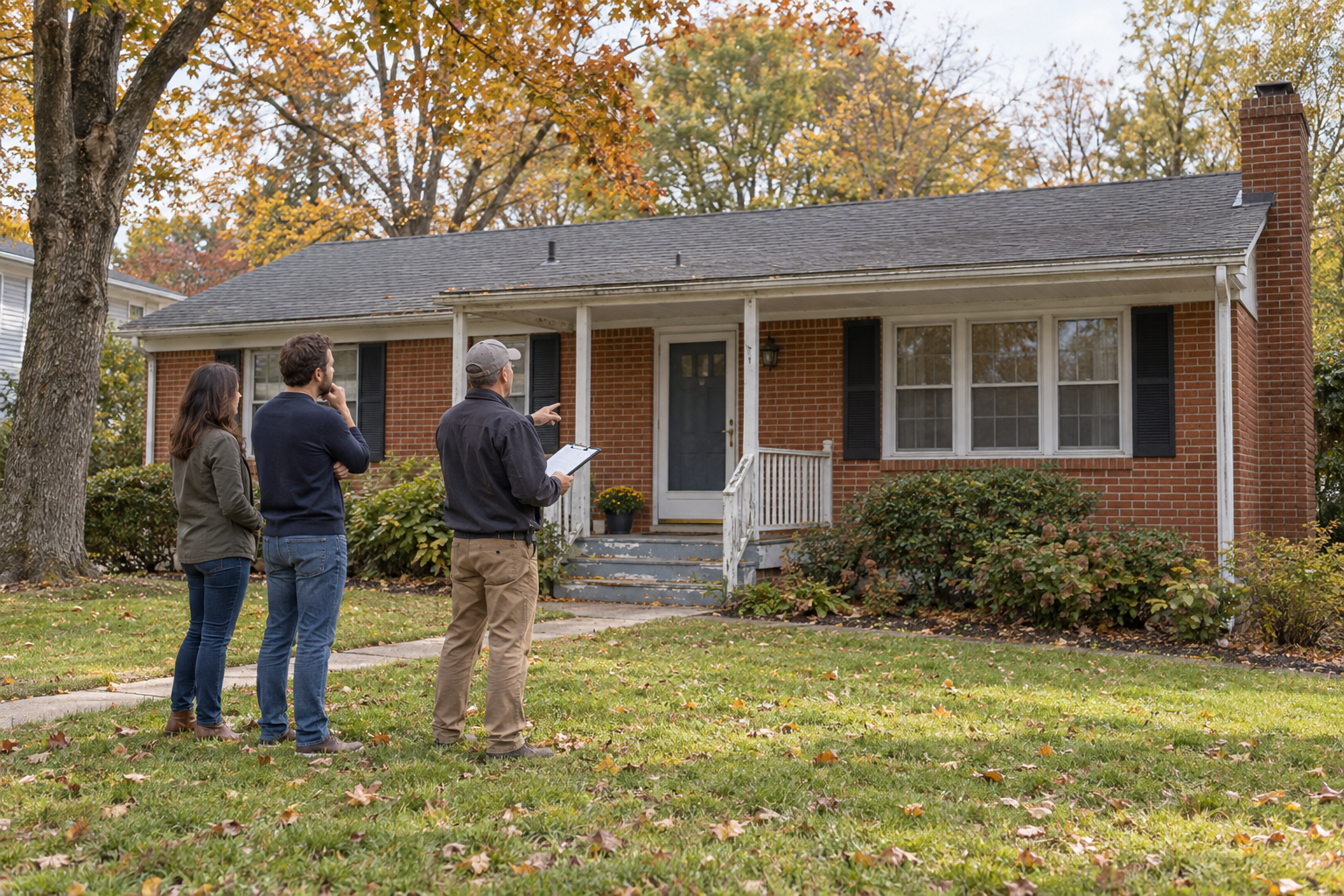
A fixer-upper can be the more predictable path for a budget-conscious Northern Virginia buyer when the house already has usable infrastructure and the work is manageable. Buying land and building can make sense, but a low land price does not establish a low total project cost. Before choosing either option, compare the cost, cash requirements and timeline of getting to a finished, livable home.
A dated kitchen is easy to see. The cost of getting electricity to a rural homesite, establishing a workable septic design or building a driveway can be harder to recognize from a listing. That difference matters when your budget has little room for surprises.
Chris Colgan Team agent Xavery Malik generally leans toward a fixer-upper for cost-conscious buyers when the major infrastructure is already in place. Chris Colgan adds a warning for anyone considering raw land: the money and time required before construction deserve just as much attention as the house plans.
Cover image: AI-generated illustration of buyers evaluating an older home. The people and property are fictional, not an actual listing or team transaction.
When does a fixer-upper make more sense?
Xavery's preference starts with what you are buying along with the house: an existing foundation, driveway, utility connections and water and sewage systems. Those features still need evaluation, but you are not necessarily starting each one from scratch.
If the home is safe to occupy and the essential systems are serviceable, a buyer may be able to spread cosmetic work over time. Paint, finishes and a future kitchen update are a different proposition from a house that needs structural repairs and several major systems replaced before move-in.
That distinction is more useful than the label “fixer-upper.” Ask whether you are buying a livable home with projects or a construction project that happens to have walls.
The downside: an existing house can hide expensive problems. Xavery flags foundations, water intrusion, electrical and plumbing work, HVAC, roofs, windows and unpermitted additions. Opening walls can reveal work that was not included in an initial estimate.
Permit requirements also depend on the scope. Fairfax County's permit guide distinguishes building, trade and land-disturbance permits. Check the applicable locality before treating a renovation as a simple cosmetic job.
When can land and a new build be the better choice?
Land can be a good fit when you want a specific home, have a flexible timeline and can establish that the site supports the intended project at an acceptable cost. Xavery sees opportunity in a well-priced lot with good access and utilities, provided the buyer can handle the financing and construction process.
Raw acreage and a lot with documented approvals and service availability are different purchases. Even a marketed “building lot” deserves verification. Confirm what has actually been approved, what remains to be done and whether the approvals fit your proposed home.
For a search extending into Fauquier, Culpeper or Front Royal/Warren County, make the parcel's water, wastewater and access arrangements part of the first conversation. In Warren County, the single-family dwelling guidelines identify several permit categories, including well/septic and land disturbance. The relevant town or county office should confirm the requirements for your property.
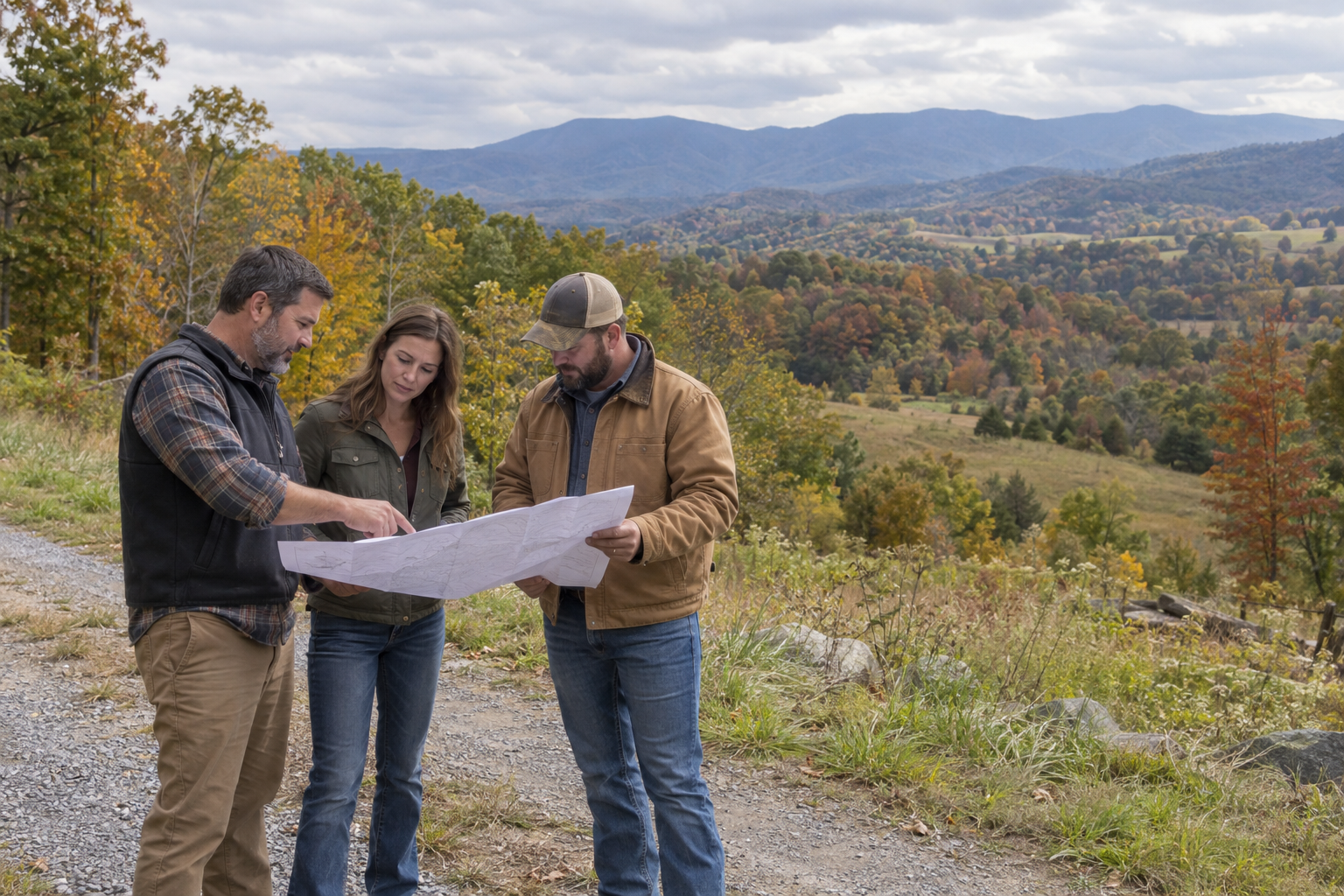
AI-generated illustration inspired by the Virginia foothills. It does not depict Xavery's clients, an available parcel or an approved homesite.
Chris's warning: budget for the work before the house
Chris cautions that building can be frustrating and that some projects can take years. His point is to allow for the full process: investigating the parcel, arranging financing, obtaining the applicable approvals, preparing the site and then constructing the home. This is a warning about possible delays, not a standard timeline for every Virginia build.
He also emphasizes the cash needed early in the process. An all-cash land purchase is not universally required: Farm Credit of the Virginias offers financing for bare land and homesites. Loan availability, terms and qualification still need to be established for your situation.
Ask a lender which expenses can be financed, when funds become available and which costs you must pay before a construction loan closes. A project can look affordable on paper and still require more upfront cash than you have available.
Chris also raises well, septic and road-access investigations. Where private systems are needed, confirm evaluation and permitting requirements with the local health department and qualified professionals. Virginia Department of Health explains the well and septic application process, including private evaluation and design services.
For road access, the requirement is not a universal “VDOT study.” VDOT requires permits for work in its highway right-of-way, including private entrances and certain entrance modifications. Establish which road authority has jurisdiction and what your proposed access requires.
Compare the entire project budget
“I tell buyers to compare the total project cost, not just the purchase price.”
— Xavery Malik, Chris Colgan Team
Xavery offered a hypothetical comparison: a $250,000 fixer-upper needing $75,000 of work versus $100,000 land needing another $50,000–$100,000 or more before construction. These are illustrative figures, not current local price ranges, bids or a completed transaction.
In that example, the house and planned renovation total $325,000 before other expenses. The land and preliminary work total $150,000–$200,000 or more without the house. Neither subtotal is an all-in budget.
| Budget item | Fixer-upper | Land and build |
|---|---|---|
| Purchase and closing | House, closing costs and financing | Land, closing costs and land/construction financing |
| Investigation | Inspection, specialist evaluations and permit records | Survey, access, zoning, soils/septic, water and site feasibility |
| Project work | Required repairs, renovation, design and permits | Design, permits, site work, utilities and house construction |
| Time and uncertainty | Temporary housing if needed, carrying costs and unexpected repairs | Housing during development, carrying costs, delays and unforeseen site work |
Get written scopes and identify exclusions. Ask how change orders are priced and build a contingency around the actual risks. Do not assume every renovation dollar will be recovered in the home's eventual value.
What Xavery learned evaluating land near Front Royal
Xavery describes working with buyers considering several acres in the Front Royal/Warren County area. Their evaluation focused on septic feasibility, a potential well, access, zoning and overall development costs. They wanted substantial due-diligence time before committing.
The useful lesson is the decision process: price per acre was only one part of the conversation. Whether the property could support the intended use mattered more than whether it looked inexpensive.
This was an account of evaluating land. Xavery did not provide a completed purchase, construction result or final cost, so it should not be read as a savings success story.
Which red flags should make you pause—or walk away?
For a fixer-upper: Xavery highlights significant foundation or structural concerns, persistent water intrusion, extensive mold, aging systems requiring major replacement and unpermitted additions. These findings call for qualified evaluation and a credible scope, not a guess about repair costs.
For land: his concerns include uncertain legal access, no established wastewater solution, difficult terrain, floodplain or wetlands issues, unclear boundaries, zoning restrictions and utility complications. A driveway you can see is not, by itself, proof of a legal right to use it.
A warning sign does not make every property unusable. The decision turns on whether you can establish a workable solution within your budget and contract deadlines. Xavery recommends walking away when a buyer cannot reasonably establish that the land supports the intended home, rather than assuming an answer will appear after closing.
Who is each option right for?
A fixer-upper may suit you if you like the existing location and layout, can verify the major systems and can afford essential repairs while postponing optional improvements. It is a poor fit if your budget relies on every unknown turning out well or you cannot manage disruption.
Land and building may suit you if customization is a priority, feasibility is documented and your financing and schedule can absorb the development process. It is a poor fit when you need a firm move-in date, have little cash beyond the purchase or are counting on the land price alone to make the project affordable.
A move-in-ready resale belongs in the comparison too. Paying more initially may be worth considering if it avoids a project you cannot comfortably fund or manage.
Common buyer questions
Do I have to pay cash for land in Virginia?
No. Land loans exist. Confirm the loan terms, down payment, property eligibility and how you would finance eventual construction before making an offer based on assumptions.
Does a perc result prove I can build my house?
Do not treat one test or old document as approval of the entire project. Have the relevant professionals and agencies confirm the wastewater design, water supply, access, zoning and other requirements for the home you intend to build.
Can I live in a fixer-upper while renovating?
Sometimes. It depends on the home's condition, the work and applicable occupancy requirements. Confirm the plan with your contractor, lender, insurer and local officials where appropriate. Budget for other housing if necessary.
Will building take years?
It can, as Chris cautions, but that is not a prediction for every project. Ask for a schedule covering due diligence, approvals, site preparation, construction and final inspections—not just the contractor's time building the house.
Compare two real options before committing
Talk with the Chris Colgan Team about your Northern Virginia home search. Bring the house or lot you are considering, your intended project, your move-in deadline and the amount you can comfortably commit. We can help organize the comparison and identify questions for the lender, contractor and local authorities.
Considering a newly built home? Read our guide to independent inspections for new construction.
Sign up for Chris's Northern Virginia breaking-news newsletter.
With original input from Chris Colgan and Xavery Malik. Xavery's evaluation experience is identified separately from general advice and hypothetical figures. Sources checked October 6, 2026.
Contributing agent: Xavery Malik

Xavery Malik
Real Estate Agent, Chris Colgan Team
Virginia license: 0225272421
Team office: 571-621-7660
Meet Xavery Malik
Visit Xavery’s website
Chris Colgan
Chris Colgan
REALTOR® | Team Leader, Chris Colgan Team
Real Broker, LLC | Powered by PLACE
Call or text: 571-437-7575
Office: 571-621-7660
info@colganteam.com
8427 W Main St, Marshall, VA 20115
ColganTeam.com | ChrisColgan.com

Chris Colgan
Team Leader | Chris Colgan Team | REAL | PLACE
or another way