
Categories
Loudoun County Real Estate, Local Development NewsPublished October 12, 2026
Loudoun’s Data Center Boom: What It Means for Taxes, Neighborhoods and Your Next Home

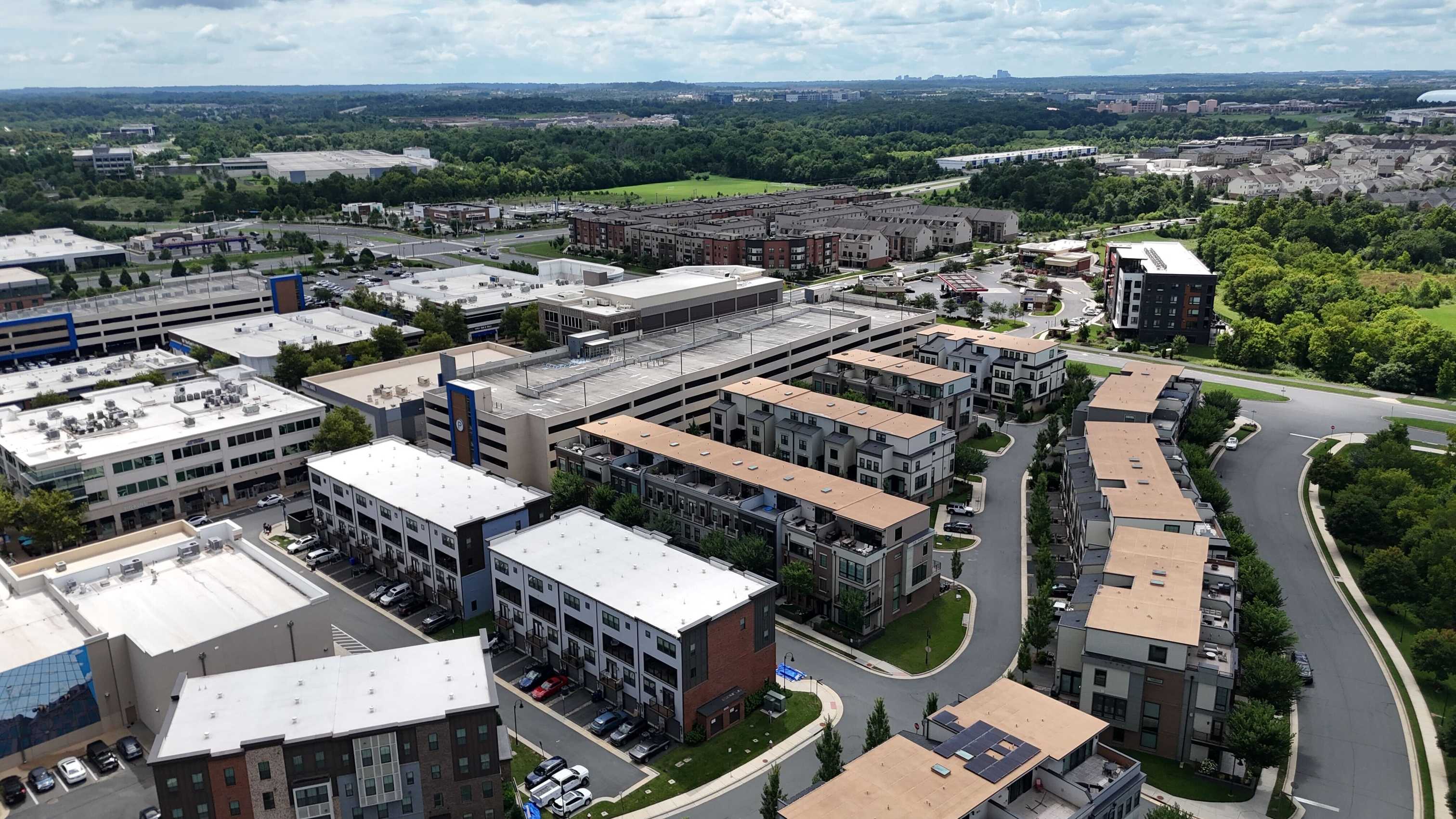
Loudoun’s data-center debate is also a housing conversation. The buildings help fund county services. The infrastructure around them can change what a neighborhood looks and sounds like. And the rules governing the next wave of development are still evolving.
In my video below, I look at this as a Northern Virginia real estate agent: what should a buyer or homeowner actually do with all these headlines? My answer starts with the specific neighborhood and the land around the home. A countywide statistic can tell you the scale of the industry. It cannot tell you what will be outside your bedroom window.
By Chris Colgan • October 12, 2026. County facts and planning timelines checked for this article. The video includes earlier meeting references; use the dated updates below for current status.
Cover: One Loudoun residential and mixed-use development in Ashburn. Photo: Chris Colgan Team / authorized SEO photo library. Real neighborhood photos throughout this article are context, not claims that the pictured homes adjoin a data center.
Know what’s changing across Northern Virginia
Get local news, new openings and community updates from Chris Colgan’s Real NoVA newsletter.
Subscribe to Real NoVAWatch: my take on Loudoun’s growth
The video connects several issues that often get discussed separately: tax revenue, development pressure, transmission lines, water, and buyers’ changing questions. This article expands that discussion and separates my observations from the county’s published findings.
The scale: built, under construction and proposed are different things
What’s happening: Loudoun reported approximately 233 data-center buildings built or under construction, totaling 56.5 million square feet, as of March 1, 2026. That is a dated snapshot, not a count of 233 fully operating buildings today.
The county also describes a 35.7-million-square-foot development pipeline that includes different approval and site-plan stages, including site plans under review. That number should not be treated as completed space or a guarantee that every project will open. Source: Loudoun County’s data-center overview.
For a home search, the status labels matter more than the biggest number in the headline. An operating facility is something you can observe. A building under construction has a changing physical footprint. An application is a proposal whose conditions or outcome may still change. Treating all three as the same creates unnecessary confusion.
The tax benefit is real—and the household calculation is more complicated
Loudoun estimates data-center real and personal property taxes at about $1.2 billion in FY2026, approximately 39% of county revenue. Its adopted FY2027 budget projects about $1.3 billion, or 40%. These are county budget figures, not revenue paid directly to homeowners. Source: county overview.
The equipment inside these facilities is an important part of that tax base, alongside buildings and land. Loudoun says the revenue supports schools, public safety, parks and other services. The county’s 2026 general real-property tax rate is $0.805 per $100 of assessed value. A lower tax rate does not automatically mean a lower individual bill if the assessment increases. Source: county tax and budget explanation.
My practical takeaway: compare the actual carrying cost of the homes you are considering. Look at the assessment, applicable tax districts, HOA or condo fees, insurance and maintenance. “Loudoun has a strong commercial tax base” is useful background; it is not a complete monthly budget.
For illustration, applying the general county rate to a hypothetical $800,000 assessment produces $6,440 a year before any additional applicable taxes or adjustments. That is an example of the arithmetic—not a tax quote for a listing. The assessment and the purchase price are also not necessarily identical.
There is a longer-term question, too. The county cautions against becoming overly dependent on one revenue source and is planning for more sustainable budget growth. Residents can recognize the benefits while still asking how future spending commitments will be funded. County budget context.
The infrastructure conversation extends beyond the building
In the video, I spend time on the power system because the building itself is only part of what residents may encounter. Loudoun says a typical data center can require 30 to 200 megawatts, depending on its size, computing intensity and cooling. It counted 95 existing and proposed substations as of March 1, 2026—again, a combined category, not 95 completed facilities.
New transmission lines are decided through the Virginia State Corporation Commission. Local land-use review and state transmission review are different processes, so following one does not replace following the other. Source: Loudoun’s energy overview.
That distinction changes the questions I would ask when comparing two homes. What is on the neighboring parcel? What is planned farther away? Is there an existing utility corridor? Are any route alternatives still being evaluated? A marketing map that stops at the neighborhood entrance will not answer all of those questions.
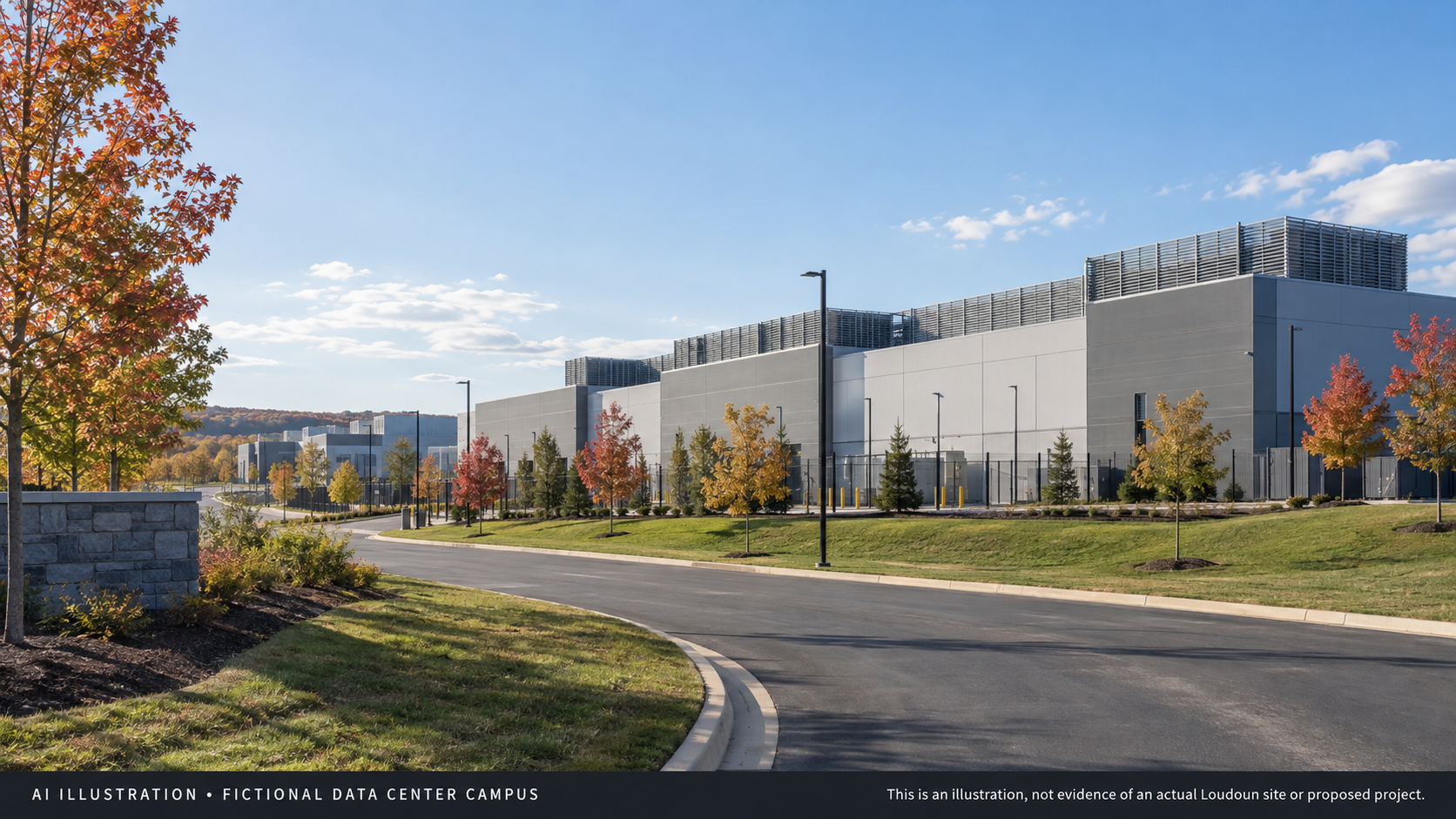
Look at the complete site plan. The placement of cooling equipment, generators, screening and access roads can matter as much as the main facade. A landscaped rendering from one angle is not the same as the view from an upstairs bedroom or a backyard in winter. Loudoun’s own design discussion emphasizes that supporting equipment belongs in the compatibility review. County design and land-use context.
Noise: visit, listen and read the actual conditions
The county identifies cooling and mechanical equipment, backup generators and some on-site power systems as potential noise sources. It also explains that persistent tonal sound can be difficult to evaluate with conventional measurements. Loudoun’s published noise guidance calls for pre- and post-construction studies under its zoning requirements and provides a complaint process. Source: county noise guidance.
My advice is to avoid making the entire decision from either a frightening social-media clip or one quiet ten-minute showing. Spend time outside. Visit at different times when practical. Ask which equipment is operating, whether construction is temporary, and what the approved noise study and conditions say. A personal listening visit helps you judge your comfort; it does not certify technical compliance.
Also distinguish occasional backup testing from continuous operation. Loudoun reports more than 4,000 permitted backup generators and says testing is generally brief and periodic; that does not mean thousands of generators run continuously. The county separately discusses on-site generation as an emerging planning issue. County energy and generator information.
Water use deserves a precise explanation
Loudoun says data centers account for an average of approximately 9% of total potable-water use in the county. It also reports that Loudoun Water supplied about 750 million gallons of reclaimed water to roughly 40 data-center customers in 2025. Those are different water categories; combining them without explanation would be misleading.
Cooling systems differ. Air cooling, recirculating systems and reclaimed-water service create different demands, so one facility’s water figure should not be applied to every project. Source: Loudoun’s water considerations.
For residents reviewing a nearby proposal, the useful questions are specific: what cooling system is proposed, what water source will it use, and what demand has the utility reviewed? The answer should come from that application or utility documentation, rather than an industry average presented as a prediction for the parcel.
Land competition and home values are not the same claim
In the video, I discuss how industrial land demand can change the economics of development. Loudoun’s published explanation puts potentially data-center-eligible land at roughly $2 million to $6 million per acre, compared with $300,000 to $500,000 for otherwise similar land without that use potential. These are broad county observations, not appraisals or offers for individual properties.
The same county source says it has not identified discernible residential sale-price discounts attributable to adjacency to a data center. That does not promise every nearby home will perform identically or that buyer preferences cannot change. It does mean a blanket claim that data centers have already caused a particular percentage decline is unsupported here. Source: Loudoun’s land-value discussion.
What I’m seeing: in the video, I describe buyers asking about data-center proximity and more negotiation in some transactions. Those are my market observations, not a countywide statistical finding or proof of a single cause. Price, condition, interest rates, inventory and location all belong in the conversation.
This is why I would not price an Ashburn house using a Loudoun-wide headline alone. I would compare relevant nearby sales, current competition, concessions when known, and the features buyers can actually choose between. A seller needs evidence about the home’s competitive set. A buyer needs a clear view of the tradeoffs they are accepting.
What changed in the rules—and what has not happened yet
On March 18, 2025, Loudoun adopted changes that generally moved data centers from by-right treatment to a special-exception process. Parcel history, applicable ordinances and any grandfathering still matter; “special exception required” is not a substitute for checking the specific property. The county also says its Rural Policy Area zoning does not permit data-center development. Source: county land-use explanation.
October 12 status: the county’s announced proposal for an up-to-12-month pause concerns final Board action on certain data-center and substation legislative applications. The Board is scheduled to consider the resolution on October 20, 2026. It is a proposal, not an enacted blanket construction ban. The announced approach would allow applications and staff/Planning Commission review to continue, with details and exceptions subject to the resolution. Source: Loudoun’s September announcement.
The separate Phase 2 standards-and-locations project is also underway. The county’s current anticipated schedule shows Planning Commission review in early 2027 and Board consideration in July 2027. These are planning milestones, not guaranteed adoption or construction dates. Source: current Phase 2 timeline.
If you watched the video’s earlier references to meetings or future deadlines, use these dated links to check what happens next. A scheduled discussion does not establish that a proposal passed. Likewise, a policy announcement does not automatically cancel an existing approval.
Why the neighborhood still comes first
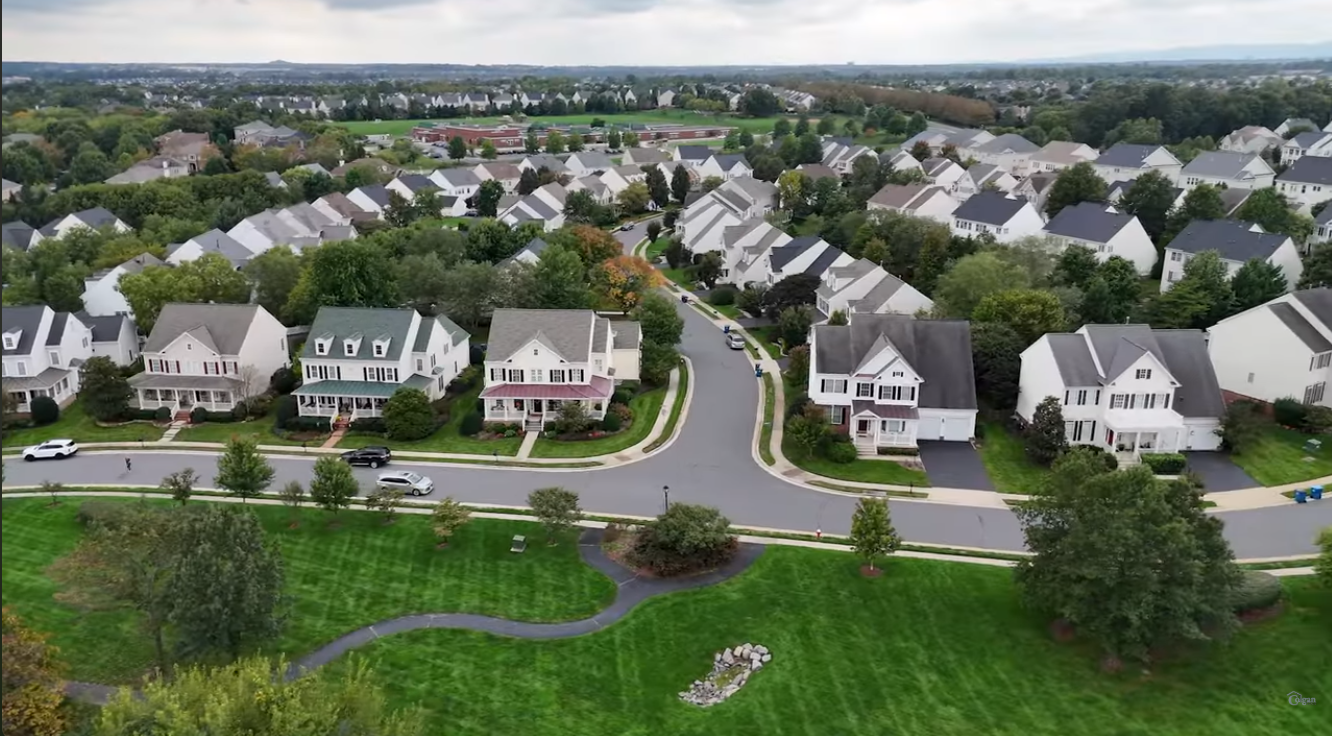
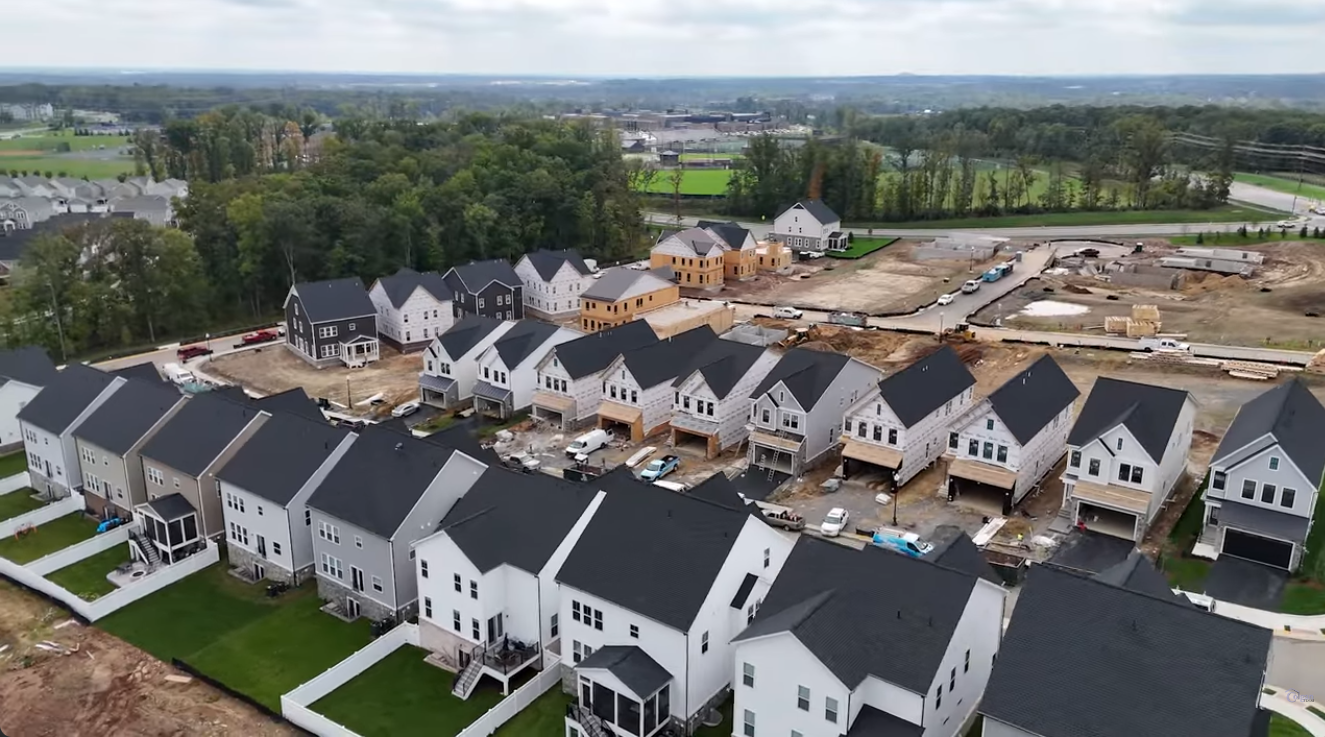
The county name covers very different living experiences. A townhome near mixed-use amenities, a detached home in a planned community, and a property in a rural setting solve different daily-life needs. My point in the video is that two homes a short drive apart can have very different surroundings and future development questions.
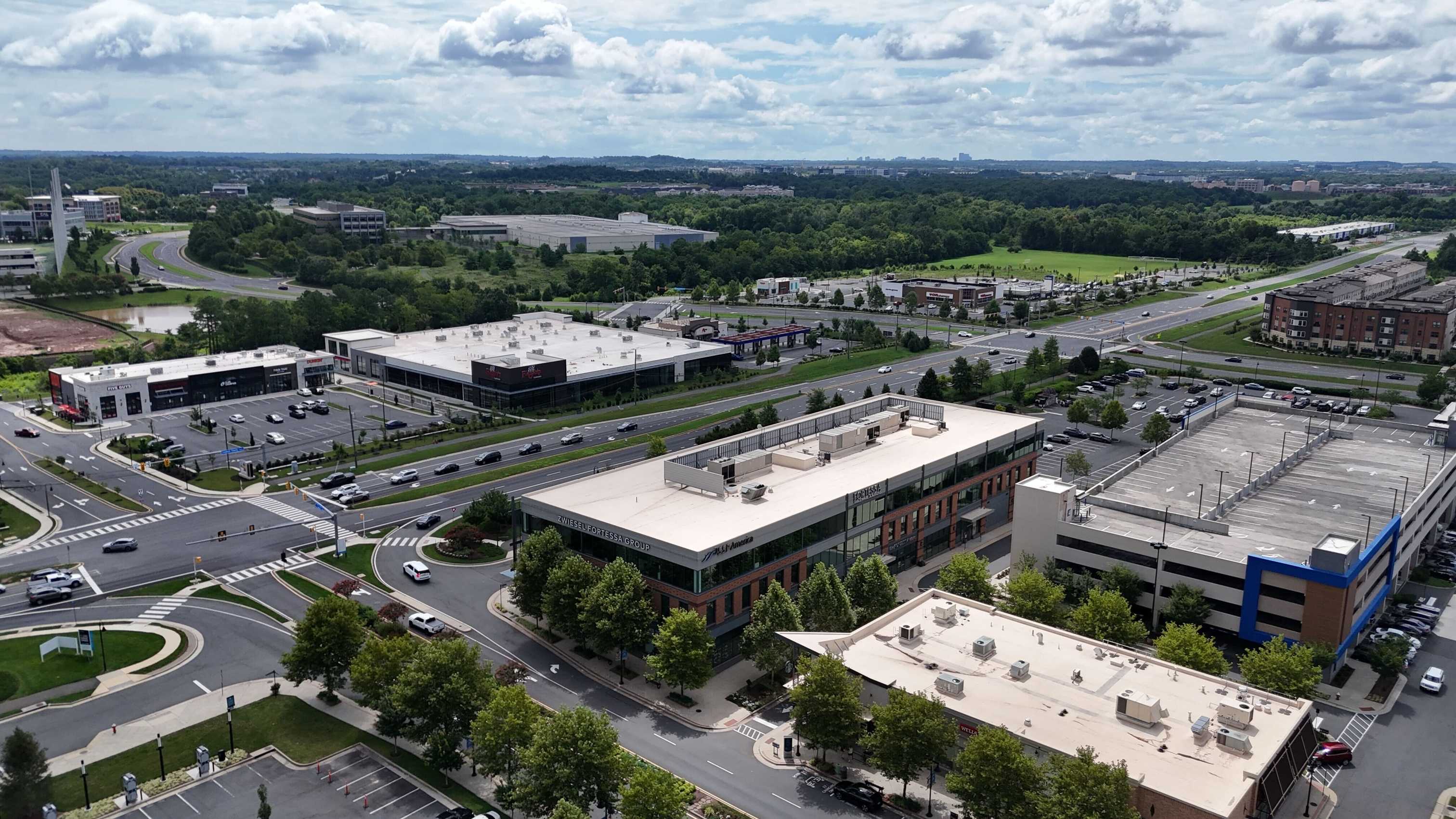
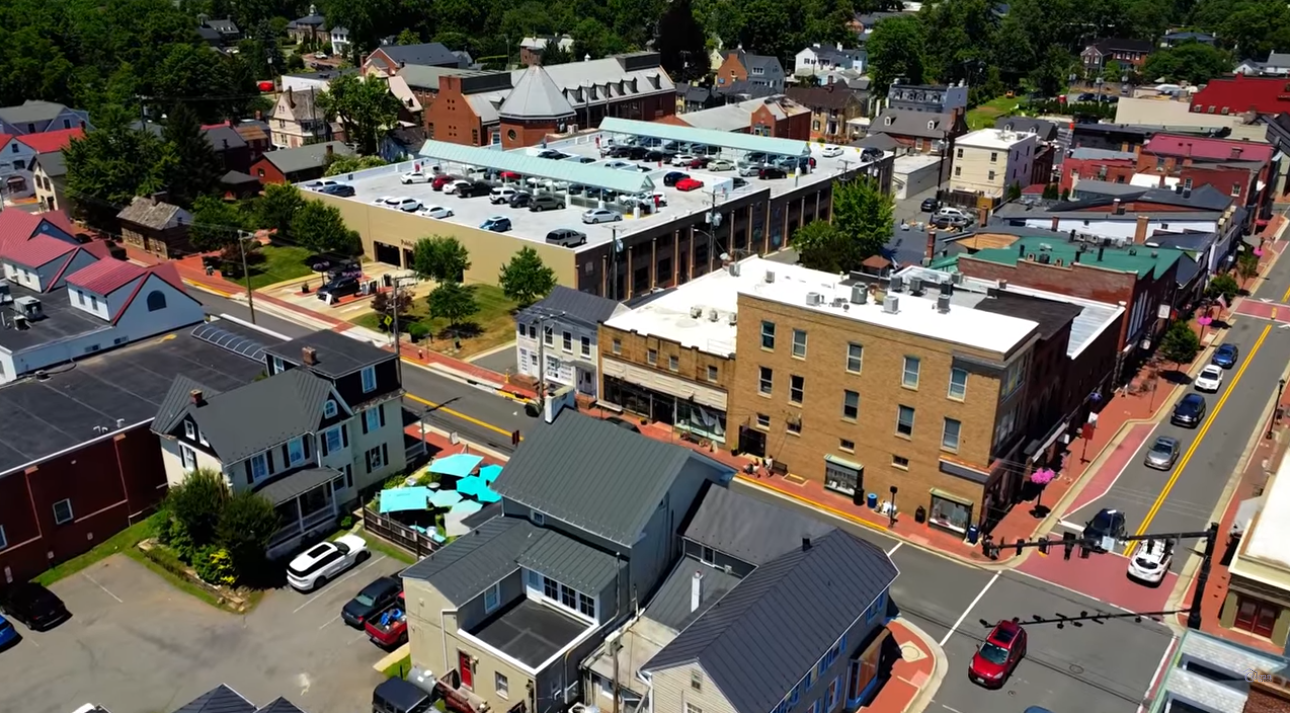
These photos show that variety. They are here because a discussion of Loudoun should show actual Loudoun places—not just anonymous industrial buildings. They are not a ranking of data-center exposure and do not identify the pictured homes as affected properties.
For someone who values proximity to work, restaurants and other everyday destinations, a more developed setting may be the right fit. Someone prioritizing open views or a quiet outdoor space may weigh the same surroundings differently. There is no reason to pretend every buyer should make the same choice.
The useful decision is specific: does this home, at this price, with these known surroundings and these pending proposals, fit how you want to live? That question produces a better conversation than labeling the entire county good or bad.
A practical plan before you buy—or list
- Identify the exact parcels. Start with the home and neighboring land, including land across major roads. Do not rely only on a neighborhood name.
- Separate existing from proposed. Use the county’s data-center map as a starting point, then verify the underlying application and status.
- Read the case documents. Look in LandMARC for the site plan, conditions, screening and relevant studies. Ask county staff when the status or applicable rules are unclear.
- Check the wider infrastructure. Review transmission proposals separately and note which routes are alternatives versus approved routes.
- Test everyday life. Visit the home’s outdoor spaces and the routes you will use. Consider views, sounds, commute and amenities together.
- Use comparable homes to set your number. Avoid assuming either a discount or a premium before looking at actual competing properties and recent sales.
For a more detailed property-level checklist, read Buying Near a Data Center in Northern Virginia. This countywide overview and that buyer checklist serve different purposes: one explains the broader changes, and the other helps organize a specific home search.
Keep up with the places you call home
Get more Northern Virginia news and local updates in your inbox with Chris Colgan’s Real NoVA newsletter.
Get the newsletterFive questions Loudoun buyers and homeowners are asking
1. Does a nearby data center automatically make a home worth less?
No automatic price adjustment is established by the sources here. An individual valuation still needs relevant comparable sales, condition, current competition and the specific surroundings. My buyer conversations should not be mistaken for a measured countywide price effect.
2. Has Loudoun stopped all new data-center development?
No. The October 20 proposal concerns certain final legislative decisions, not a universal halt to applications or construction. Existing approvals and parcel-specific rules require separate review. Check the county’s current case records before relying on a headline.
3. Can I tell everything I need to know from the building’s distance?
No. Distance is one starting point. The orientation of equipment, intervening structures, topography, screening and associated infrastructure can change the practical experience. Review the site documents and visit the property rather than treating a single radius as a universal answer.
4. Do all data centers use the same amount of water and electricity?
No. Facility size, computing activity and cooling design differ. Ask for the project’s own utility information. County totals describe the industry at a broader scale and should not be presented as the demand of a particular site.
5. What should I do if I already own a home in Loudoun?
Stay informed about nearby applications and evaluate your own moving plans using current comparable homes. A headline alone is not a reason to rush a sale. If you are considering selling, we can review the competition, likely buyer questions and a realistic preparation and pricing strategy.
Let’s look at your part of Loudoun
Send us the home or neighborhood you are considering. We can help compare available homes, organize the public-record questions and put the local real estate choices in context. If you already own here, start with a home-value estimate and then talk with us about the details an automated number cannot see.
About Chris Colgan
Chris Colgan is a lifelong Northern Virginia resident with more than 20 years of real estate experience. The Chris Colgan Team helps buyers and sellers understand neighborhoods, evaluate their options and plan their next move.
The Chris Colgan Team • Real Broker LLC • Powered by PLACE
Call or text: 571-437-7575
Office: 571-621-7660
info@colganteam.com
8427 W Main St, Marshall, VA 20115
Editorial and image notes: Chris’s perspective comes from the embedded video. County facts are linked beside the relevant claims and were checked October 12, 2026. Six real Loudoun photographs come from the Chris Colgan Team’s authorized SEO library; their capture dates are not asserted as current. One clearly labeled AI illustration depicts a fictional campus and is not a photograph, rendering or evidence of an actual Loudoun project.

Chris Colgan
Team Leader | Chris Colgan Team | REAL | PLACE
or another way