
Categories
Buyer Guides, Northern Virginia Real EstatePublished September 20, 2026
Moving to Falls Church, VA? What the Price Premium Buys in 2026

Updated September 20, 2026
Direct answer: Falls Church can be an excellent fit for buyers willing to pay a close-in Northern Virginia premium for access to Washington, D.C., Arlington, Tysons, Metro, established neighborhoods, and a compact downtown. The tradeoff is that the same budget may buy a smaller or older home here than it would farther west—and “Falls Church” can mean either the independent City of Falls Church or a Fairfax County property with a Falls Church mailing address.
That jurisdiction distinction affects taxes, schools, permits, services, and market comparisons. Before judging any listing, confirm exactly where it sits and compare it with homes governed by the same jurisdiction.
Falls Church quick take
- What buyers are paying for: a close-in location, multiple transportation options, established neighborhoods, and convenient access to jobs and amenities.
- First question to answer: Is the property in the City of Falls Church or Fairfax County?
- Housing: older Cape Cods, cottages and ramblers, renovated homes, infill construction, townhomes, condos, and mixed-use residences.
- Transit: East Falls Church and West Falls Church Metro stations serve the broader area, but neither station is inside City limits.
- August 2026 City market: 21 closed sales, a $1.25 million median sale price, and 15 median days on market.
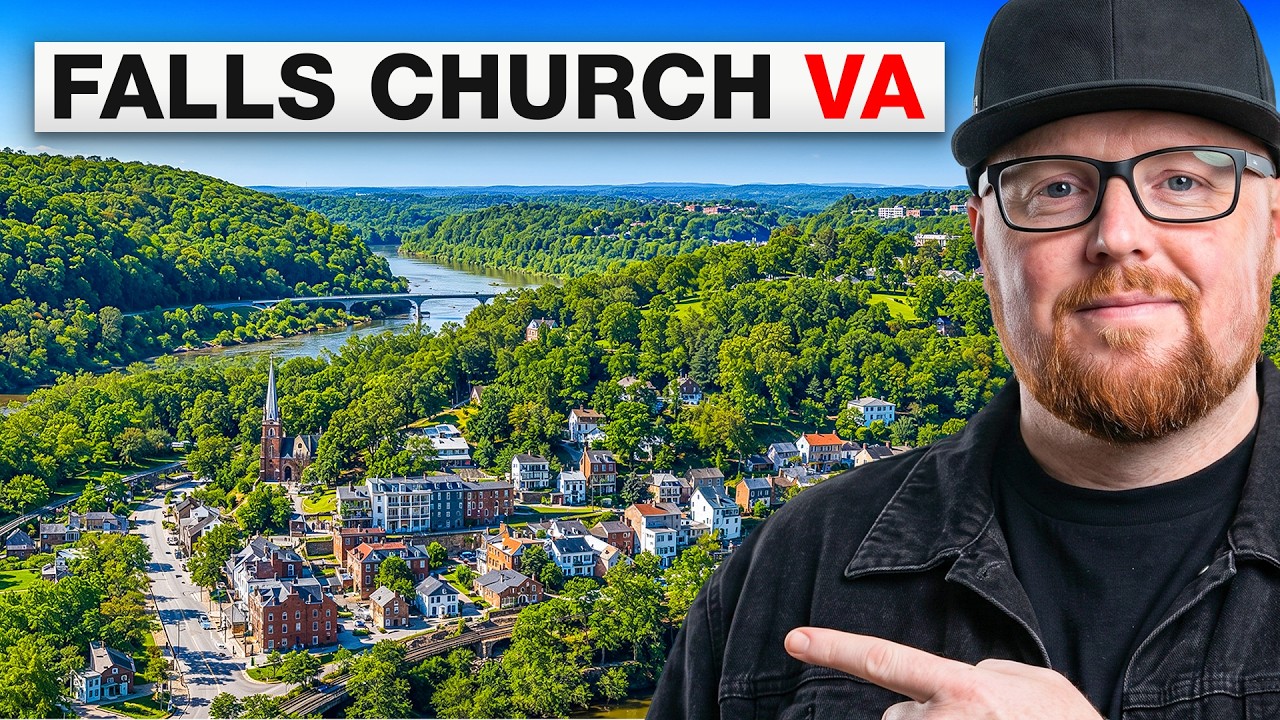
Watch the full Falls Church driving tour
In this neighborhood tour, I drive through Falls Church with a local agent and resident. We discuss the location, older housing stock, teardown and new-build activity, Metro access, downtown redevelopment, traffic, restaurants, and nearby destinations such as Merrifield and Lake Barcroft.
Having trouble with the player? Watch the Falls Church tour on YouTube.
In this guide
1. First, determine which “Falls Church” you mean
Falls Church can mean either the independent City of Falls Church or a broader Fairfax County postal area. The City is a compact, 2.05-square-mile municipality with its own government, public-school division, tax administration, permitting system, and services. Many properties with a Falls Church mailing address are actually in Fairfax County.
The City’s official Address Finder explains that not every Falls Church mailing address lies within City limits. Merrifield, Seven Corners, and Bailey’s Crossroads are examples of nearby Fairfax County areas that can use a Falls Church address.
| Question | City of Falls Church | Falls Church address in Fairfax County |
|---|---|---|
| Local government | City of Falls Church | Fairfax County |
| Public schools | Falls Church City Public Schools | Fairfax County Public Schools; assignment varies by address |
| 2026 real-estate tax rate | $1.18 per $100 assessed value | $1.12 base rate per $100, plus applicable parcel-specific charges |
| How to verify | City Address Finder | Fairfax County iCare |
Those headline tax rates do not tell you the complete annual cost. Fairfax County parcels can carry stormwater, refuse, leaf-collection, or special-tax-district charges, while assessments also differ. Compare the actual assessment, tax district, current bill, and services for the specific property. See the City’s FY2027 budget and the County’s official tax-rate table.
2. What the Falls Church price premium looks like in 2026
The September 2026 Falls Church city market report, using Bright MLS data and August closed sales, shows a tight market with a small number of transactions.
| Market measure | Reported figure |
|---|---|
| Homes sold in August 2026 | 21 |
| Median sale price | $1,250,000 |
| Median list price | $1,250,000 |
| Sale-to-list-price ratio | 99% |
| Median days on market | 15 days |
| Active homes displayed September 20 | 35 |
| Homes under contract | 12 |
| Months of inventory | 1.7 months |
| August sales above original asking price | 38% |
Important context: Twenty-one closings are a small sample. The report also shows an August 2025 median of $707,500, but the year-over-year difference should not be interpreted as 77% property appreciation. A monthly median can swing sharply when the mix of condos, townhomes, older detached houses, and new luxury homes changes. A realistic value analysis needs recent comparable sales matched by jurisdiction, property type, location, size, condition, and lot.
3. Older homes, renovations, and infill construction
Falls Church offers more variety than its compact geography might suggest. Many residential streets contain postwar Cape Cods, cottages, ramblers, and other established homes. Buyers may also encounter expanded or fully renovated houses, teardown replacements, larger infill construction, townhomes, condos, and residences in newer mixed-use developments.
The practical question is not simply “old or new.” It is which combination of location, usable space, condition, lot, and future maintenance fits your budget. An older detached home may provide an established street and yard but require renovation. A newer home may offer modern systems and more square footage while carrying a higher purchase price and less mature landscaping. A condo can reduce exterior-maintenance responsibilities but adds association fees, rules, parking details, and building-level financial considerations.
For an older property, review the roof, drainage, electrical system, plumbing, HVAC, windows, insulation, foundation, sewer line, prior additions, and permit history. For new or substantially renovated construction, study the builder’s specifications, warranties, drainage plan, final inspections, and what is actually included in the contract.
4. Metro access and a close-in Northern Virginia location
Falls Church sits near I-66, Route 7, Route 29, and Route 50, giving residents several ways to reach Arlington, Washington, D.C., Tysons, and other employment centers. That access is one reason the area commands a premium, but no route is immune to peak-period traffic. Test a prospective commute at the times you will actually travel.
The broader Falls Church area is served by East Falls Church, which is in Arlington and serves the Orange and Silver lines, and West Falls Church, which is in Fairfax County and serves the Orange Line. Neither station is inside the independent City.
A listing described as “near Metro” may still require a bus, bicycle, car, or substantial walk. Measure the actual route from the front door, check sidewalk continuity and crossings, and review current service directly with WMATA. The City also reports 11 Capital Bikeshare stations in and around Falls Church; current biking and first-mile options are summarized on the City’s biking page.
5. Downtown convenience without giving up every suburban feature
The City’s Broad Street and Washington Street corridors provide restaurants, coffee shops, services, entertainment, civic events, and newer mixed-use development. Buyers can also find quieter residential blocks, parks, a year-round Saturday farmers market, community programs, and local history nearby.
Cherry Hill Park includes playgrounds, courts, picnic facilities, and the historic farmhouse. The Falls Church Farmers Market runs year-round with more than 50 vendors; check the official page for current seasonal hours. The W&OD Trail also provides a major regional biking and walking connection.
Redevelopment continues to change parts of the area. The City’s official project tracker lists active and completed projects, including West Falls, Founders Row, and Broad & Washington. New shops and housing can add convenience, but buyers should also check nearby construction and approved plans before purchasing.
Mosaic District in Merrifield and Lake Barcroft are useful nearby reference points, but neither is inside the independent City of Falls Church. Seven Corners and Bailey’s Crossroads are also Fairfax County areas that may use Falls Church mailing addresses. This distinction matters when evaluating taxes, schools, services, and comparable sales.
6. The tradeoffs buyers should expect
- Price versus space: proximity can mean accepting less house, a smaller lot, an older property, or a larger monthly payment.
- Competition is uneven: the overall City report shows limited supply, but conditions differ by price band and property type.
- Traffic is real: regional access is valuable, yet I-66 and major surface roads can become congested.
- Walkability is address-specific: some homes are close to daily needs; others still work best with a car.
- Parking and fees vary: condos and mixed-use buildings require careful review of parking rights, guest policies, monthly fees, reserves, insurance, and pending assessments.
- Redevelopment brings change: new shops and housing can improve convenience while producing temporary construction and altered traffic patterns.
7. A Falls Church buyer’s due-diligence checklist
- Confirm the jurisdiction. Use the City Address Finder and Fairfax County parcel records instead of relying on the postal address.
- Verify the exact school assignment. Check Falls Church City Public Schools or the FCPS Boundary Locator as appropriate. FCPS adopted boundary changes for 2026–27, and some phased changes may not immediately appear in the locator.
- Calculate the complete monthly cost. Include principal and interest, property taxes, insurance, association fees, utilities, and likely maintenance—not only the purchase price.
- Test transportation from the property. Drive the commute, walk the Metro route, and check bus or bicycle options at realistic travel times.
- Match comparable sales carefully. Separate City sales from Fairfax County sales and compare like property types, condition, lot size, and construction age.
- Investigate the physical property. Tailor inspections to the home’s age, renovations, drainage, systems, sewer connection, and permit history.
- Read association documents early. For a condo or HOA property, review budgets, reserves, insurance, meeting minutes, rules, litigation, rental restrictions, and planned assessments.
- Check nearby projects. Review permits and development proposals that could affect the block, traffic, or views.
Falls Church is usually the strongest fit for buyers who place a high value on location and access and are comfortable making a deliberate trade between price, space, age, and convenience. The right answer may be City proper, a Fairfax County neighborhood with a Falls Church address, or another nearby community. The parcel-level details decide it.
Falls Church, VA frequently asked questions
Is the City of Falls Church the same as every Falls Church mailing address?
No. Many Falls Church postal addresses are in Fairfax County. Confirm the governing jurisdiction for each property before comparing schools, taxes, services, or sales.
What was the median sale price in Falls Church city in August 2026?
The Bright MLS-based report showed a $1.25 million median across 21 sales. Because that is a small sample, it is a market snapshot—not a valuation for every home.
Is Falls Church walkable?
Parts of the City place shops, restaurants, parks, and services within a practical walk. Other addresses require a car, bus, or bicycle, so evaluate the specific route.
Does Falls Church have Metro access?
Yes. East Falls Church serves the Orange and Silver lines, while West Falls Church serves the Orange Line. Neither station is inside City limits, and actual door-to-station convenience varies by property.
Are Falls Church homes mostly older?
Older postwar houses are an important part of the inventory, but buyers can also find renovated homes, infill construction, townhomes, condos, and mixed-use residences.
Are taxes and schools the same throughout Falls Church?
No. City of Falls Church and Fairfax County properties operate under different local governments and school divisions. Verify the parcel and current official records.
Is Falls Church a competitive housing market?
The September report showed 1.7 months of City inventory and a 99% sale-to-list ratio. Competition still varies by property type, condition, price, and micro-location.
What should I inspect in an older Falls Church home?
Focus on structure, drainage, roof, electrical, plumbing, HVAC, insulation, sewer line, additions, and permits. Your inspection plan should reflect the property’s actual age and history.
Thinking about buying in Falls Church?
I can help you separate City properties from Fairfax County options, compare recent sales correctly, and identify the tradeoffs that matter before you write an offer.
Talk With Chris Search Homes
About the author
Chris Colgan
REALTOR® | CEO & Team Leader, Chris Colgan Team at Real Broker
Born and raised in Northern Virginia, Chris brings more than 20 years of local real estate experience and over $1 billion in lifetime sales to buyers and sellers across the region.
Market statistics are snapshots from the linked September 2026 report using August Bright MLS data and may change. Information is deemed reliable but should be independently verified. School boundaries, taxes, transit service, association fees, and property conditions can change and should be confirmed with the appropriate official source.
Chris Colgan
Team Leader | Chris Colgan Team | REAL | PLACE
or another way