
Categories
Buyer Guides, Homeowner TipsPublished September 19, 2026
Should You Test for Radon Before Buying a Home in Northern Virginia?

By Chris Colgan | Chris Colgan Team | Real Broker, LLC
September 19, 2026
Yes—include radon testing in your due diligence before buying a Northern Virginia home. A neighborhood's reputation, a renovated basement, or a new-construction label cannot tell you the home's actual radon level. Start by requesting existing reports, then coordinate appropriate testing and any necessary follow-up with a qualified professional before your contractual deadlines.
The EPA's Home Buyer's and Seller's Guide to Radon recommends testing when buying or selling. It recommends fixing homes at 4 picocuries per liter (pCi/L) or higher and notes that lower readings still carry risk.

Why this matters in Loudoun and across Northern Virginia
The Virginia Department of Health specifically cautions that the old EPA map understates Loudoun County's risk: VDH says Loudoun should be considered high risk rather than moderate. The agency also reports that elevated readings have been found in every Virginia county, including places labeled low risk. A map is background information, not a result for a particular address. Source: VDH's Virginia radon map guidance.
For a buyer comparing Ashburn, Gainesville, and Fairfax, the useful question is therefore the same: what do we know about this house, and what still needs checking? Do not turn a county designation into a reason to skip an otherwise suitable community—or skip testing.
What should you arrange before writing the offer?
Put these questions on your inspection planning list:
- Records: Has the seller provided a radon report, its date, and the location tested? If there is a mitigation system, request installation and service information.
- Scope: Does the testing proposal cover the spaces you intend to use? Tell the tester about an intended basement office, guest room, or future finished area.
- Timing: When can equipment be placed and collected, when will the report arrive, and how much decision time remains?
- Contract: Have your agent explain the actual testing, response, and access provisions in your agreement. Do not assume that a general inspection appointment creates additional rights or extends a deadline.
For example, imagine a Gainesville buyer planning to work in the basement five days a week. That is a useful detail to share before the tester prepares the scope. An Ashburn new-build buyer should separately ask the builder about installed radon features and available test results. These are planning examples, not reports about particular homes or past team transactions.
How much should you budget?
VDH publishes these general figures. They are statewide guidance, not September 2026 Northern Virginia contractor quotes. The source page was last updated December 17, 2025 and reviewed for this article on September 19, 2026.
| Service | VDH general cost guidance | What to confirm |
|---|---|---|
| Professional test | Usually $100–$200 | Devices, coverage, report timing, and any retest fee |
| Typical sub-slab mitigation system | $800–$1,200 | Property-specific scope and included follow-up testing |
| Crawlspace or multiple sections | $2,000 or more | All foundation areas covered and total installed price |
Get a current written estimate before negotiating an amount. VDH explains that the system depends on the home's construction and other conditions. A low advertised starting price is not a complete proposal. Source: VDH testing and mitigation guidance.
Who should perform the test?
VDH says professional radon testers and mitigators in Virginia must hold current NRPP or NRSB certification. Its Indoor Radon Program page links to both directories. Check the person performing the work, the proposed scope, and their availability rather than choosing solely by price.
Ask the provider for written preparation instructions. Testing has specific placement and operating conditions; moving a device to make a showing look better is not a sensible shortcut. Have the parties coordinate access and normal use of the house with the tester.
What if the result is elevated?
Get a qualified mitigation proposal, then evaluate the work, timing, and cost together. An elevated result is a problem to resolve; it does not by itself tell you whether this is the wrong purchase.
- Seller completes work: Discuss the contractor, written scope, completion date, and verification of results. The advantage is having work addressed before ownership; the challenge is coordinating everything before closing.
- Buyer arranges work: Discuss any proposed credit with your lender and agent before relying on it. This may give you more control over the contractor, but leaves you responsible for scheduling, cash needs, and follow-through.
- The parties cannot agree: Review available choices against your actual contract and deadlines. Do not assume a report automatically permits cancellation or requires the seller to pay.
If you are already stretching your cash to close, add the proposed work to your overall budget. Our Northern Virginia first-time buyer guide explains why the payment and repair budget both matter. For the larger negotiation, see our guide to offering below asking price.
Does new construction change the answer?
A new home still needs testing. EPA says to ask whether radon-resistant features were installed and recommends testing after occupancy even when those features exist. A passive system may need a fan if results are elevated. Ask the builder what is included, what has been tested, and who handles any follow-up. Source: EPA new-home guidance.
Who benefits from this approach?
This plan fits buyers who want a documented condition assessment and a clear budget, and sellers who want time to address questions before closing. It is especially useful when a lower level is important to how you plan to live.
Rushing a DIY kit through a short contract window is a poor fit when you need timely, professionally documented results. An open-ended repair commitment is also a poor fit for a buyer without spare cash or scheduling flexibility. Resolve those practical constraints before agreeing to a solution.
Five questions buyers ask about radon
Can I use my neighbor's test result?
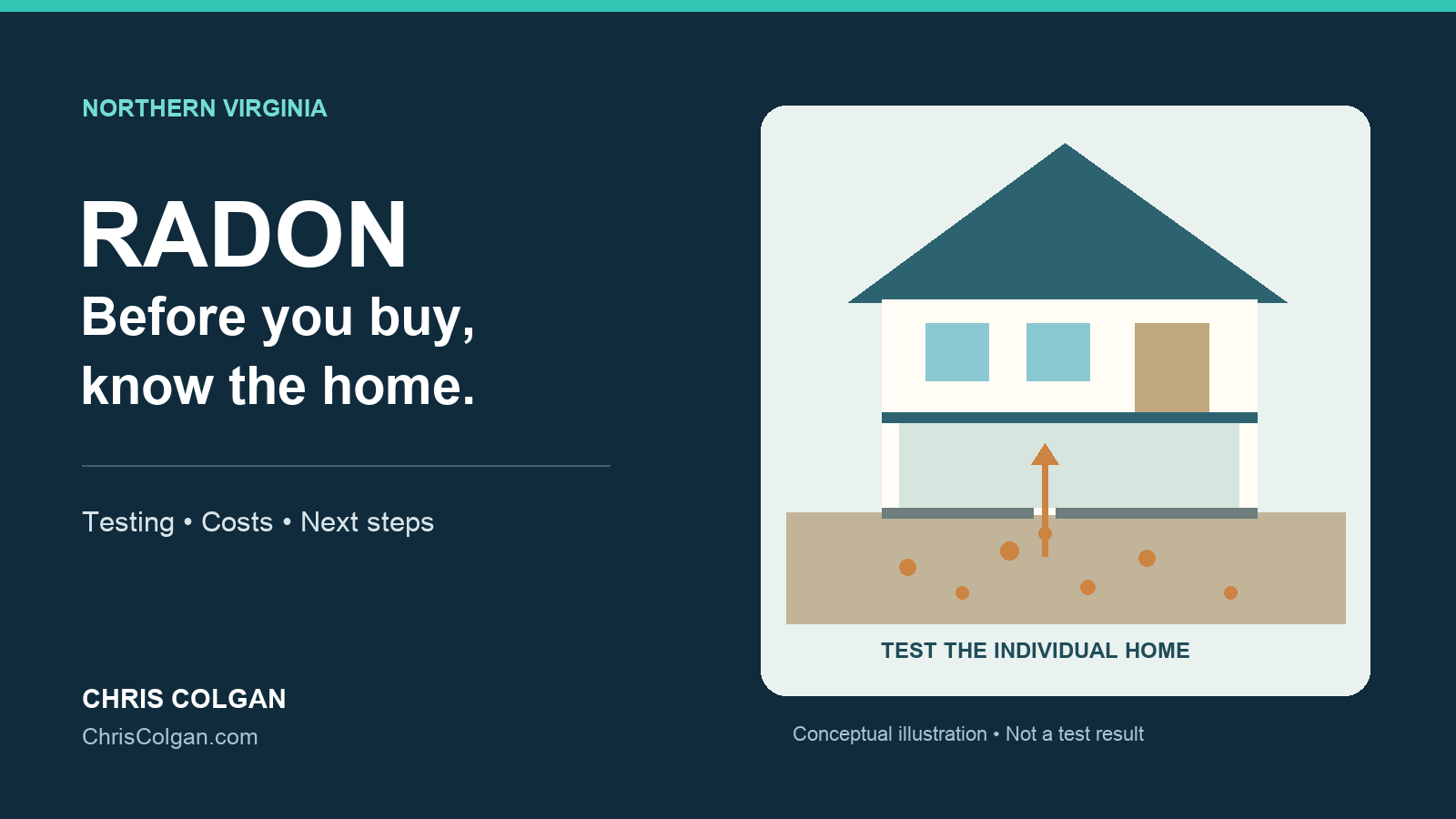
No. Nearby houses can produce different results. Test the home you are evaluating rather than substituting a result from another address.
Does a house without a basement need testing?
Yes. EPA notes that homes with or without basements can have a radon problem. Tell the testing professional about the home's layout.
How long should I allow?
EPA describes transaction testing options lasting at least 48 hours. That is measurement time, not a promise of a complete report in two days. Allow separately for scheduling, setup, collection, reporting, and any follow-up.
Does an existing mitigation system eliminate the question?
No. Request the records and ask a qualified professional how to verify current performance. A visible pipe or fan is not a substitute for a result.
Will the seller pay for mitigation?
Do not budget on that assumption. Review the contract and negotiate a clear written arrangement with your agent. Include the scope, timing, and responsibility for follow-up, not just a dollar amount.
The testing points above draw on the EPA buyer and seller guide, revised March 2024. Sources reviewed September 19, 2026.
Build the inspection plan before the deadline
Send the Chris Colgan Team the listing you are considering, your expected closing timeline, and any inspection reports already available. We can help organize the buying questions and coordinate the next steps with qualified testing professionals.
Book a 30-minute home-buying planning conversation.
Chris Colgan
REALTOR® | Team Leader, Chris Colgan Team
Real Broker, LLC | Powered by PLACE
Call or text: 571-437-7575 | Office: 571-621-7660
info@colganteam.com
8427 W Main St, Marshall, VA 20115
ColganTeam.com | ChrisColgan.com

Chris Colgan
Team Leader | Chris Colgan Team | REAL | PLACE
or another way