
Categories
Buyer Guides, Condo Living, Northern Virginia Real EstatePublished September 24, 2026
What Condo Issues Should Northern Virginia Buyers Resolve Before Closing?

Before closing on a Northern Virginia condo, understand any unresolved violations or repairs, who must address them, who pays, and whether the association's finances and rules fit your plans. Get written evidence of resolution and have your lender confirm the condo works for your financing. Start this review as soon as the documents arrive—not during the final walk-through.
We asked Chris Colgan Team agents Peter Van Cleave and Jontae Mclean what buyers should check. Their advice comes down to a practical question: do you understand what you are taking responsibility for when you get the keys?
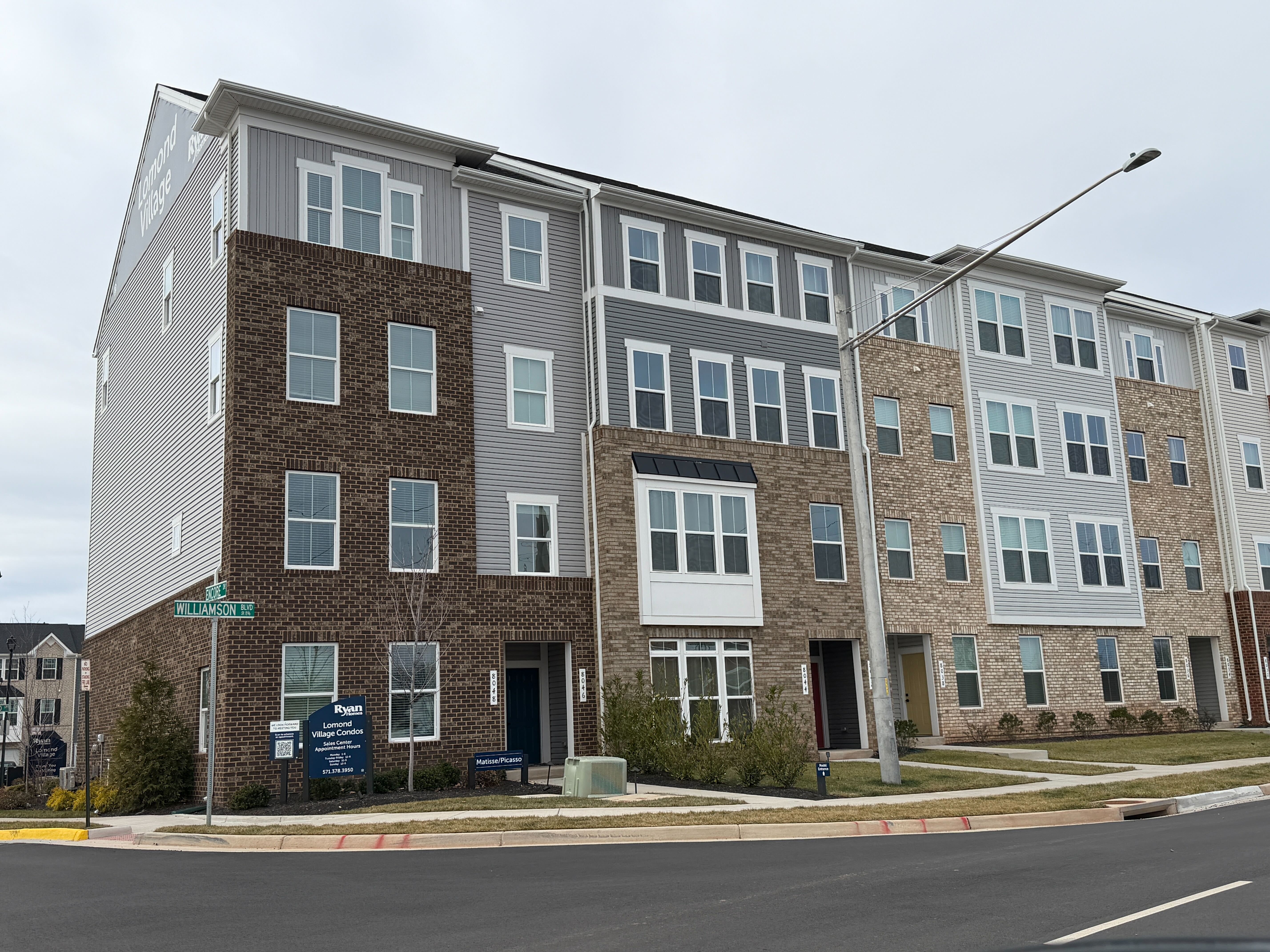
Cover photo: townhome-style condos at Lomond Village in Manassas, from our local photo library. Shown for area context; no problem with this community is alleged.
Peter's starting point: identify the issue, the responsibility and the bill
Peter recommends sorting out three things: what remains open, who must fix it, and who will pay. Those are separate questions. A seller agreeing to do work does not by itself establish that the association considers a violation closed.
His review includes the resale certificate, budget, reserve study, meeting minutes, insurance information and governing documents. He also recommends checking parking, rental and renovation restrictions against how you intend to use the home.
For an Arlington buyer with two cars, the parking rules may change the decision. For someone buying in Reston who may rent the home later, leasing restrictions deserve attention now. For a Fairfax buyer planning renovations, ask what approvals would be needed before assuming the project is straightforward. These are buyer-planning examples, not findings about a specific building.
What is in a Virginia resale certificate?
Virginia Code § 55.1-2310 lists required contents, including assessments, approved capital expenditures, reserve information, financial statements, the operating budget, a reserve study or summary, specified litigation and insurance information, and governing documents. It also addresses notices of certain violations and meeting minutes.
The violation disclosures have defined limits. The statute refers to specified written notices given or received by the board; it is not a blanket guarantee that every possible defect has been discovered. Read the actual documents and ask about unclear or conflicting information.
Jontae's advice: get written proof an issue is resolved
Jontae recommends written confirmation from the association or management company that an issue has been resolved. When repairs are involved, she also wants supporting documentation such as paid invoices, receipts or other evidence of completion.
For a hypothetical unapproved flooring alteration, organize the review like this:
- What was flagged? Identify the notice and the work or use it concerns.
- What does the association require? Clarify the corrective work, approval or documentation needed.
- What was actually completed? Review the relevant records and any appropriate inspection.
- Has the association closed the matter? Ask for written confirmation addressing that specific issue.
- What remains payable? Clarify any outstanding charges and the agreed allocation before settlement.
A contractor's receipt can support that work occurred. It is not necessarily the same thing as association approval. If the records disagree, resolve the disagreement rather than relying on a verbal assurance.
Chris's Fairfax condo negotiation: why this matters in a real deal
Chris shared a Fairfax condo negotiation in which the buyer strongly wanted confirmation that the condo violations had been taken care of and wanted a clean bill of health from the association. Getting comfortable with those issues was a significant part of the negotiation.
That example illustrates the buyer's concern; it does not establish the final outcome or mean an association can guarantee there will never be another repair, assessment or dispute. Peter and Jontae's document-first approach helps turn that concern into specific questions the parties can address.
The monthly condo fee is only part of the cost
Jontae's warning is that buyers can focus on the current fee and overlook special assessments, fee increases or planned major repairs. She recommends looking beyond today's monthly payment to understand what could arise after closing.
Ask whether a cost is already approved, merely being discussed, or only a possibility. Do not treat those three situations as interchangeable. A reserve study can help frame future needs; it is not a promise that fees will stay flat.
For budgeting only, a hypothetical $6,000 assessment spread across 12 equal payments would add $500 a month during that period. That is an illustration, not a quote from a Northern Virginia association. Request the actual amount, schedule and terms for the property you are considering.
A higher monthly fee is not automatically worse value if it covers expenses you would otherwise pay separately. A low fee is not automatically a bargain. Compare what is included, the financial documents, the condition of shared components and your capacity to absorb additional costs.
Confirm financing before the closing date becomes a problem
Peter recommends that buyers using FHA or VA financing have their lender confirm whether the condominium qualifies for the intended program and whether additional approvals are needed.
HUD explains that FHA financing can involve an approved condominium project or an eligible Single-Unit Approval in a project that is not FHA-approved. Project financial condition, insurance and other factors matter. A missing project approval is therefore a question for your lender, not enough information on its own to declare a purchase impossible—or assured.
Give the lender the actual condominium information early. Your personal loan qualification and the property's acceptability both need attention.
When should you pause or reconsider?
Jontae recommends pausing when significant violations remain unresolved, major assessments are approaching, or important documents have not been provided. The point is to understand the problem and potential financial responsibility before moving forward.
A documented repair plan may be manageable for one buyer and too uncertain for another. A rental restriction may suit an owner-occupant's plans but conflict with an intended rental strategy. Make that decision with the facts and your budget in front of you.
Check deadlines immediately. Under Virginia Code § 55.1-2312, cancellation timing depends on the contract and delivery circumstances. Delivery of an incomplete certificate can still matter. Ask your agent and, where needed, a Virginia real estate attorney to identify the applicable deadline and required notice. Do not assume questions to management automatically extend your rights.
Five questions to bring to your condo review
- Which issues remain open, and where is that documented?
- Who must resolve each issue, and who has agreed to pay?
- What written evidence will show resolution?
- What costs and restrictions could affect my plans?
- What review and financing deadlines apply to this purchase?
Frequently asked questions
Is a resale certificate the same as a home inspection?
No. The certificate addresses association-related disclosures. An inspection evaluates physical conditions within its scope. One does not replace the other.
Is a seller's repair receipt enough to clear a condo violation?
Not necessarily. Jontae recommends written association or management confirmation in addition to relevant completion records. Match the evidence to the issue identified.
Does a low monthly condo fee mean lower ownership costs?
Not necessarily. Compare what the fee covers and investigate additional expenses. Jontae specifically flags assessments, fee increases and planned repairs as items buyers can overlook.
Should I automatically walk away from an assessment?
No. Understand its amount, purpose, payment terms and how it affects your budget. The decision depends on the documented facts and your tolerance for the remaining uncertainty.
Can I wait until the final walk-through to review the documents?
That is a poor plan. Review them promptly and establish your applicable deadlines early. Unanswered questions do not automatically preserve cancellation rights.
Talk through the documents before you commit
Considering a condo in Fairfax, Reston, Arlington, Alexandria or elsewhere in Northern Virginia? Connect with the Chris Colgan Team about your buying plans. Peter and Jontae can help you organize the questions for the association, lender and other professionals involved.
For another property-specific due-diligence question, see our guide to buying near a Northern Virginia data center.
Sign up for my Northern Virginia breaking-news newsletter.
Contributing agents

Peter Van Cleave
Colgan Team Agent Partner
571-217-3588 | Peter@ColganTeam.com
Meet Peter Van Cleave

Jontae Mclean
Real Estate Agent, Chris Colgan Team
jontae@colganteam.com
Team office: 571-621-7660
Meet Jontae Mclean
Chris Colgan
Chris Colgan
REALTOR® | Team Leader, Chris Colgan Team
Real Broker, LLC | Powered by PLACE
Call or text: 571-437-7575
Office: 571-621-7660
info@colganteam.com
8427 W Main St, Marshall, VA 20115
ColganTeam.com | ChrisColgan.com
Published September 24, 2026. Based on Peter and Jontae's written advice supplied September 24 and Chris's previously shared Fairfax example. Primary sources checked September 24, 2026. This guide focuses on resale purchases; new-construction purchases can involve different documents and rights. Have transaction-specific legal and financing questions reviewed by the appropriate professionals.

Chris Colgan
Team Leader | Chris Colgan Team | REAL | PLACE
or another way